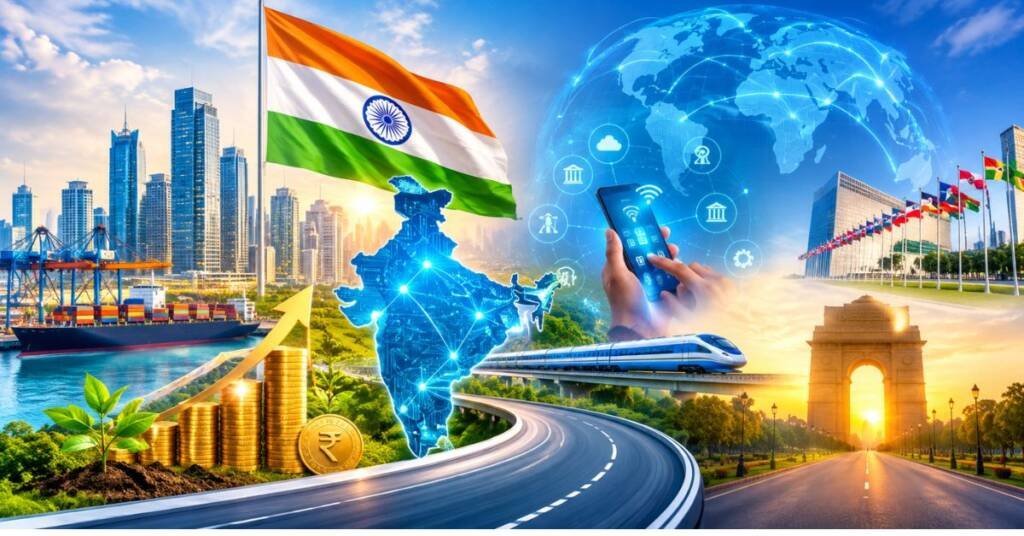
Summary
- At present, India is passing through an unprecedented phase of transformation. India’s role in the global economy has been established as a major growth engine.
- Through its robust foreign policy, technological revolution, infrastructural development, and the resolve for self-reliance (Atmanirbhar Bharat), India has emerged as a strong economic and strategic power on the global map.
- This article presents a comprehensive overview of India’s recent economic achievements, digital revolution, infrastructural transformation, diplomatic successes, and the vision of a “Viksit Bharat” (Developed India) built by the collective strength of 140 crore citizens.
India’s Progress: Economic Growth, Digital Revolution, and Global Leadership
1. Introduction: India’s Rise in the New Global Order
India’s growth in the 21st century is not merely a game of numbers; it is the result of fundamental and structural reforms taking place across every sector of the country. Even amidst global economic uncertainties, the Indian economy has maintained consistent stability and a high growth rate.
- Leading Global Economy: India is today among the fastest-growing major economies in the world. A balanced synergy between agriculture, manufacturing, and services sectors has insulated the economy from recessionary shocks.
- Demographic Dividend: India’s vast youth population is the country’s greatest strength. Through Skill India and digital literacy, this young workforce is being channeled toward nation-building.
- Aspirational Society: A large and empowered middle class is expanding across the country, giving new momentum to domestic consumption and innovation.
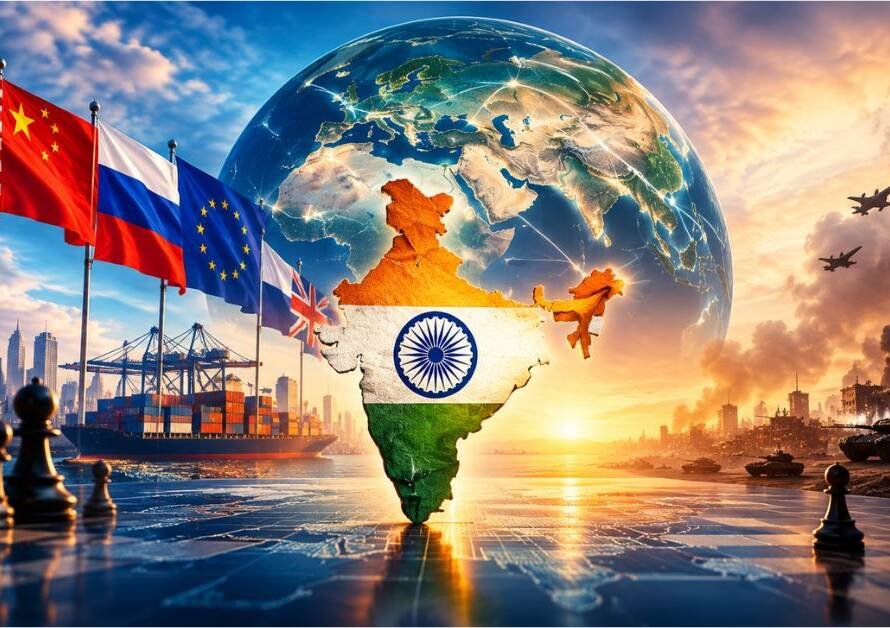
2. ‘China+1’ and Atmanirbhar Bharat: The Manufacturing Revolution
Amidst shifts in global supply chains, India has established itself as a reliable and efficient alternative. Initiatives like ‘Make in India’ and ‘Atmanirbhar Bharat’ have inspired global companies to invest in the country.
- Production Linked Incentive (PLI) Schemes: PLI schemes across more than 14 crucial sectors—including electronics, automobiles, pharmaceuticals, defense, and textiles—have given an unprecedented boost to domestic production.
- Mobile and Electronics Manufacturing: India has now become the second-largest mobile phone manufacturer in the world. India is also advancing rapidly in semiconductor and high-tech electronics manufacturing.
- Self-Reliance in Defense: Reducing dependence on defense imports, India is now exporting indigenous weapon systems—such as BrahMos missiles, Tejas fighter jets, and coastal radar systems—to friendly nations.
- Critical Minerals and Green Energy: Keeping future technologies in mind, India is collaborating with Australia and other partner countries to ensure uninterrupted supplies of lithium, cobalt, and rare earth minerals.
3. Digital India: A Case Study for the World
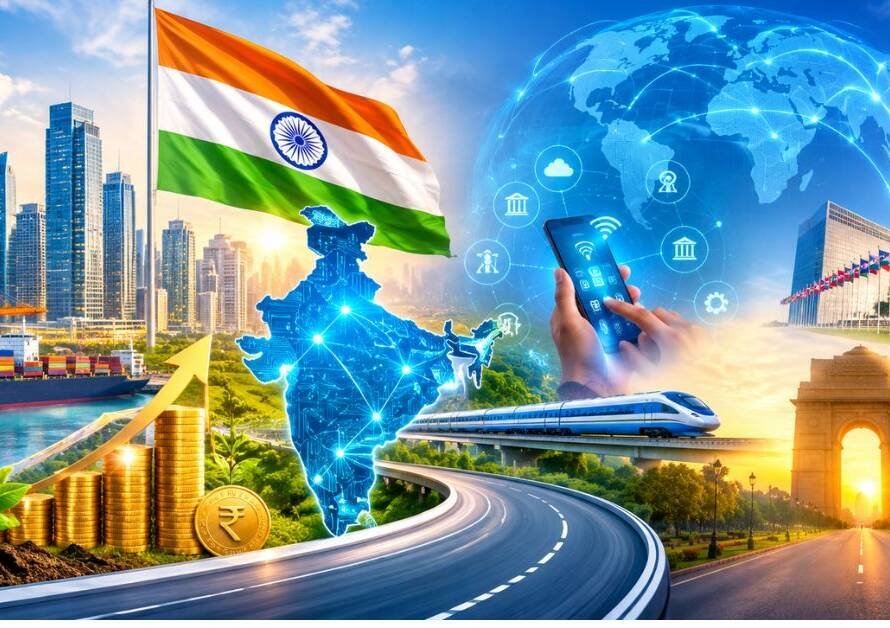
India’s Digital Public Infrastructure (DPI) has become a role model for the entire world. It has not only brought transparency to administrative processes but has also made the lives of ordinary citizens remarkably accessible.
- Global Dominance of UPI: Unified Payments Interface (UPI) has taken digital payments to the masses in India. Today, this technology has been adopted by several countries such as France, Singapore, and the UAE.
- Transparency and Direct Benefit Transfer (DBT): The integration of Jan Dhan accounts, Aadhaar, and Mobile (JAM trinity) ensures that government scheme funds reach beneficiaries’ bank accounts directly, eliminating middlemen and corruption.
- Digital Entrepreneurship: India has become the third-largest startup ecosystem in the world. Indian youth are continuously innovating in fintech, edtech, healthtech, and agritech.
4. Infrastructural Transformation: Speed and Scale
Infrastructure is the backbone of any nation’s development. Through the PM GatiShakti National Master Plan, India is modernizing and integrating its logistics and transportation network.
- Road and Highway Network: National highways are being constructed at a record pace. The expressway network has significantly reduced inter-city travel distances and logistics costs.
- Railway Modernization: Indian Railways is undergoing a complete overhaul through Vande Bharat Express, the Kavach safety system, and Dedicated Freight Corridors.
- Ports and ‘Blue Economy’: Under the ‘Sagarmala’ project, port capacities have been expanded. Additionally, transshipment hubs are being developed at strategic locations like Galathea Bay (Nicobar).
- Aviation Connectivity: The ‘UDAN’ scheme has brought Tier-2 and Tier-3 cities onto the aviation map, giving a massive boost to regional trade and tourism.
5. Strategic Diplomacy and Global Leadership
India’s foreign policy today is based on the principle of ‘Nation First’, balancing global peace, regional security, and economic interests.
- Indo-Pacific Strategy: India has deepened relations with the Quad and regional partners (Japan, Australia, Indonesia, Seychelles, etc.) to ensure freedom and security in the Indo-Pacific region.
- Voice of the Global South: By forcefully raising the issues of developing and poor nations on global platforms (such as G20 and BRICS), India has established itself as a universally accepted leader of the Global South.
- Climate Action and Green Development: Through initiatives like the International Solar Alliance (ISA) and Lifestyle for Environment (LiFE), India is leading the world toward clean energy and sustainable development.
6. Welfare and Inclusive Growth
The true benefits of economic growth remain incomplete until they reach the last person in society. India’s welfare policies focus on social justice and empowerment.
- Housing and Sanitation: Millions of families have been provided permanent homes under the ‘Pradhan Mantri Awas Yojana’, and the ‘Swachh Bharat Mission’ has brought unprecedented improvements to the country’s health and dignity standards.
- Healthcare Security: Through the ‘Ayushman Bharat’ scheme, poor and middle-class families across the country are gaining access to free and quality health insurance.
- Women Empowerment: ‘Women-led Development’ is at the center of policies today. From Self Help Groups (SHGs) to Mudra loans, women are becoming the backbone of the economy.
7. Conclusion: Advancing Toward Viksit Bharat @ 2047
- India stands at a juncture today where looking back is not an option. The right balance of economic reforms, infrastructural development, technological progress, and global diplomacy has propelled the country to new heights.
- Despite external challenges and global turmoil, the unwavering resolve of 140 crore Indians and the visionary policies of the government are rapidly steering the nation toward the goal of becoming a fully prosperous, empowered, and developed India (‘Viksit Bharat’) by the year 2047.
🇮🇳Jai Bharat, Vandematram 🇮🇳
Read our previous blogs 👉 Click here
Join us on Arattai 👉 Click here
👉Join Our Channels👈