Summary
- This discourse presents a practical roadmap to address the contemporary demographic, cultural, and administrative crises facing modern Hindu society.
- It highlights a revolutionary solution: the establishment of free residential Gurukul systems funded and managed by the accumulated resources of prosperous temples.
- Concurrently, it identifies internal challenges—such as institutional greed, vested interests of shrine managers, and the inertia of passive commentators (‘Gyanchands’) who merely discuss problems without acting—as the primary administrative hurdles.
- Ultimately, it establishes that a Gurukul is only a complementary mechanism; the true sculptors of a nation and its culture remain the parents and their unbreakable family values.
Integration of Family Values
. Contemporary Social and Demographic Crises
Modern Hindu society is currently grappling with severe, often invisible, demographic and cultural challenges. The root causes of these crises include:
- Economic Insecurity and Declining Birth Rates: Due to the highly expensive nature of the modern consumerist education system, poor and middle-class families dread the costs associated with child-rearing and higher education. This economic anxiety has led to a shrinking family size, triggering a long-term demographic imbalance.
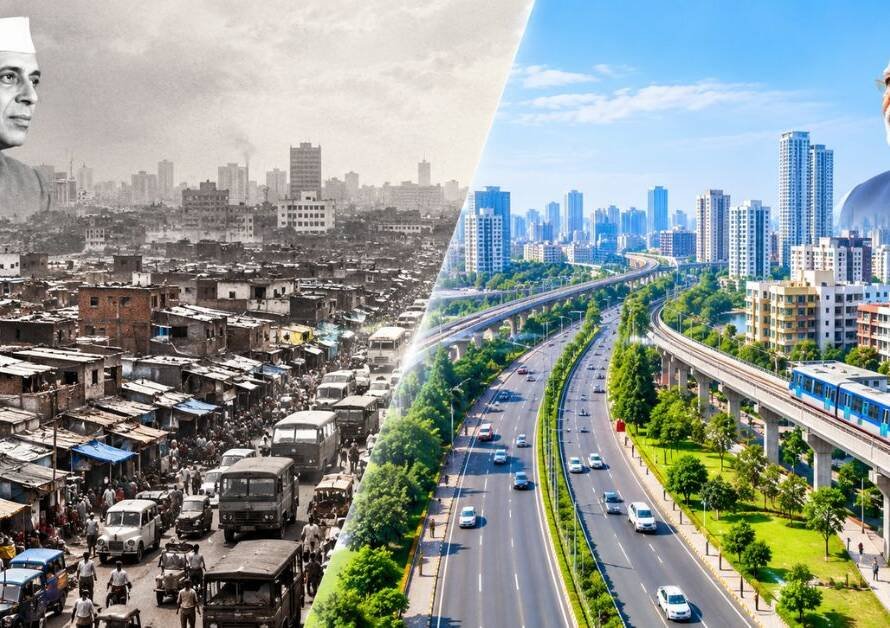
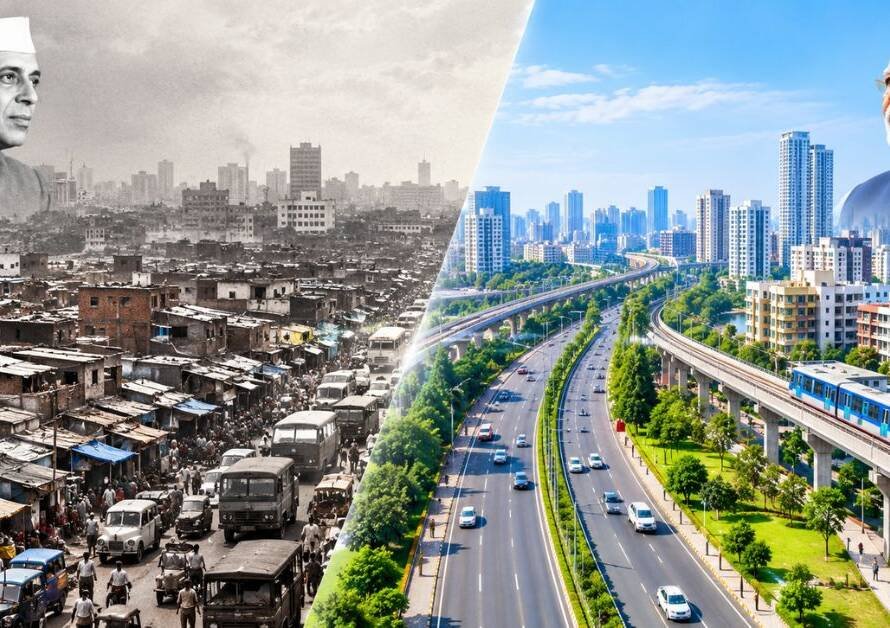
- Cultural and Ideological Drift: Under the influence of blind Westernization and the colonial Macaulay education system—which was designed merely to produce clerks—the younger generation is drifting away from its roots. Lacking ideological conviction and self-pride, youth, particularly young women, easily fall prey to organized cultural and predatory maneuvers like ‘Love-Jihad’.
- Fracturing of the Family Fabric: The collapse of joint families and the rise of a purely materialistic worldview have led to the systemic neglect of the elderly. The growing proliferation of old-age homes and orphanages stands as stark evidence that our traditional value system is in deep crisis.
2. Temple-Driven Residential Gurukuls: A Revolutionary Solution
The solution to these multifaceted problems lies within our traditional social structures. By utilizing the massive resources of our affluent temples, the trajectory of society can be fundamentally transformed:
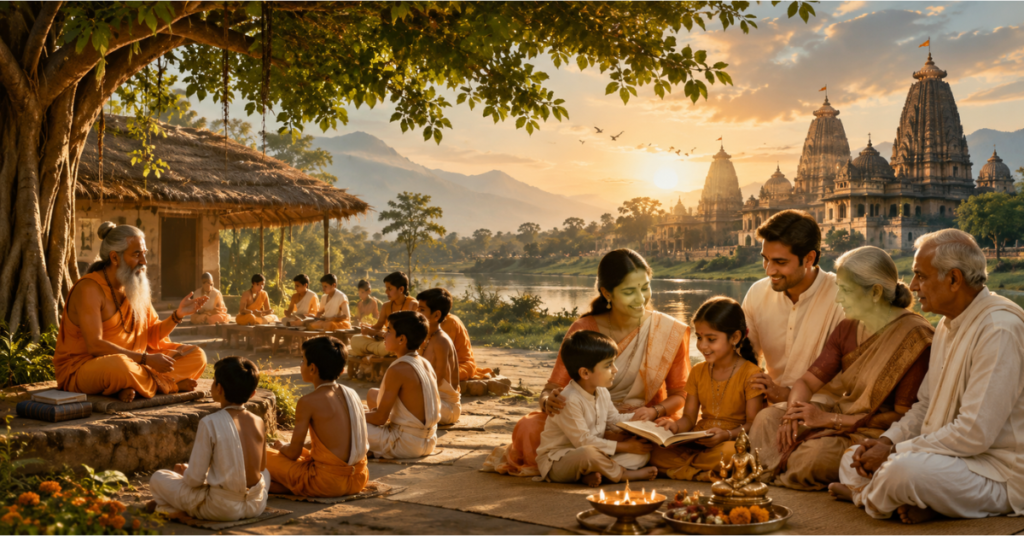
- Free and Secure Environment: If major and local temples establish large-scale, free residential Gurukuls—where the complete responsibility of food, clothing, housing, and a blend of modern and traditional education is borne by the temple trust—the primary economic burden will be lifted from middle-class and poor families.
- Demographic Safety Net: When parents are assured that their children’s future is completely secure and bright, they will feel empowered to raise larger families free from financial dread, naturally restoring the demographic equilibrium of society.
- Self-Reliance and Skill-Based Education: Contrary to the current rote-learning system and the blind rat race for corporate jobs, these Gurukuls will educate children according to their inherent nature and core competencies ($Virtue-Based$ $Education$). Whether a child’s natural aptitude lies in research, business, agriculture, or defense, they will be trained to master that specific field, creating a new generation of entrepreneurs.
- Building an Ideological Shield: Young men and women graduating from a Gurukul lifestyle will be equipped with Vedic knowledge, self-defense skills, and irrefutable logical reasoning. Free from inferiority complexes, they will remain immune to ideological manipulation, laying the foundation for a healthy, addiction-free, and resilient society.
3. Administrative Challenges: ‘Gyanchand’ vs. ‘Karmchand’ and Institutional Greed
The greatest obstacle to this visionary idea is not external, but internal. The core distortions plaguing the community from within include:
- The Dominance of the ‘Gyanchand’ Mentality: Our society has no shortage of ‘Gyanchands’—intellectuals who lament problems for hours on social media and give grand speeches from podiums. However, there is a severe drought of ‘Karmchands’—those who actually step onto the ground to work with selfless dedication. We talk endlessly about problems but invest no time or labor into executing solutions.
- Vested Interests of Shrine Managers: Many managers of large temples, religious leaders, and priests prioritize their personal financial interests and institutional control over the broader welfare of society and the nation. Funds from community offerings are frequently diverted toward personal luxury or narrow sectarian purposes rather than societal renaissance.
Administrative Solutions and Strategy:
- Decentralized Parallel Governance: The religious and ritualistic rights (puja, sacraments) should remain entirely with the traditional priests. However, the management of temple funds and social welfare projects (like the Gurukuls) must be handed over to an independent governing body composed of enlightened, selfless, and retired professionals (such as former military officers, scientists, and administrative bureaucrats).
- Proof of Concept: Instead of waiting for the entire system to reform overnight, conscious and capable members of society must unite to launch 2–3 model Gurukuls in collaboration with transparent, service-oriented trusts. When society witnesses the transformative results firsthand, public pressure will naturally compel other temples to reform their administrative structures.
- Financial Transparency through Digital Tools: Implementing public audits and digital tracking for every penny donated is non-negotiable. When donors see their contributions directly shaping the nation’s future, the influx of financial support will multiply exponentially.
4. The Family Foundation: Parents as the True Sculptors
No matter how ideal or robust a Gurukul system is, it remains a complementary institution. The core architecture of character formation is possible only within the sanctuary of the family:
- No Substitute for Family Values: The sanctuary of parental care, a mother’s affection, and a father’s discipline can never be replaced by any school or Gurukul. A child spends only a few hours a day or a few months a year in an educational institution; their subconscious mind is molded by the ambient environment of the home.
- Action Over Preaching: Children rarely learn from what they are told; they learn from what they observe their parents doing. If there is no respect for elders at home, or if parents themselves are immersed in a materialistic rat race and unethical behavior, the education received at a Gurukul will remain a mere academic subject rather than a lived philosophy.
- Making Home the First Gurukul: A child who has not grown up listening to the epics of the Ramayana, Mahabharata, and the legacies of great historical heroes in their mother’s lap will always have a fragile ideological foundation. Parents must step out of the ‘Gyanchand’ paradigm and transform their own homes into the primary Gurukul through their daily conduct.
- Co-existence of Gurukul and Family: A true revolution occurs when the Gurukul and the family work in tandem. Gurukuls must periodically organize orientation workshops for parents. This ensures that the values a child absorbs at the academy find a continuous, nurturing, and compatible ecosystem when they return home.
5. Lasting Impact and the Renaissance of Sanatan
If this three-dimensional model (Temple Resources + Gurukul Education + Family Values) is implemented with absolute integrity, the resulting outcomes will revitalize both society and the country:
- Rebirth of Sanskrit and Culture: Sanskrit is not merely a language; it is the repository of our traditional knowledge systems, sciences, and values. Through these Gurukuls, Sanskrit will once again become a living language, unlocking ancient wisdom for modern applications.
- Obsolescence of Old-Age Homes: A generation raised with sensitivity, values, and gratitude can never dream of abandoning their elders to orphanages or senior care facilities. The elderly will naturally reclaim their rightful, respected place as guides and anchors within the family structure.
- A Healthy and Self-Reliant Nation: Citizens emerging from this ecosystem will not only be intellectually superior but also mentally resilient, remaining entirely free from the modern epidemics of depression and aimlessness. This is the only sustainable path to preserve Sanatan culture and re-establish India as a beacon of global wisdom.
🇮🇳Jai Bharat, Vandematram 🇮🇳
Read our previous blogs 👉 Click here
Join us on Arattai 👉 Click here
👉Join Our Channels👈