Summary
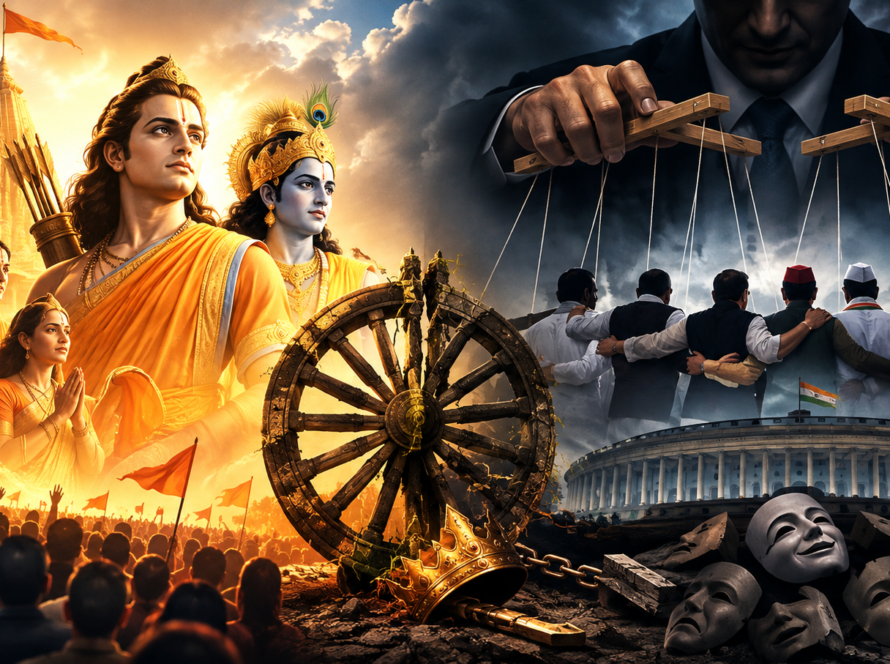
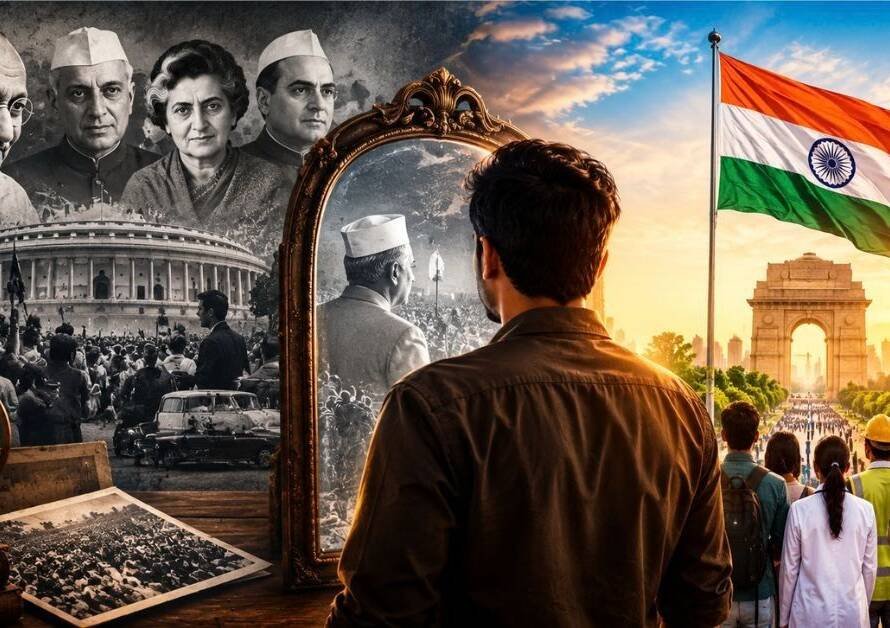
- In Indian politics, the long-term stability and public support of any political organization depend on its foundational ideology rather than a few individual faces or a single family dynasty.
- A photograph from a recent Bharatiya Janata Party (BJP) training camp in Assam serves as direct evidence that even top leaders holding the highest offices operate under the party’s founding ideology and historical stalwarts. In stark contrast, the Indian National Congress is currently navigating a severe ideological vacuum and family-centric politics.
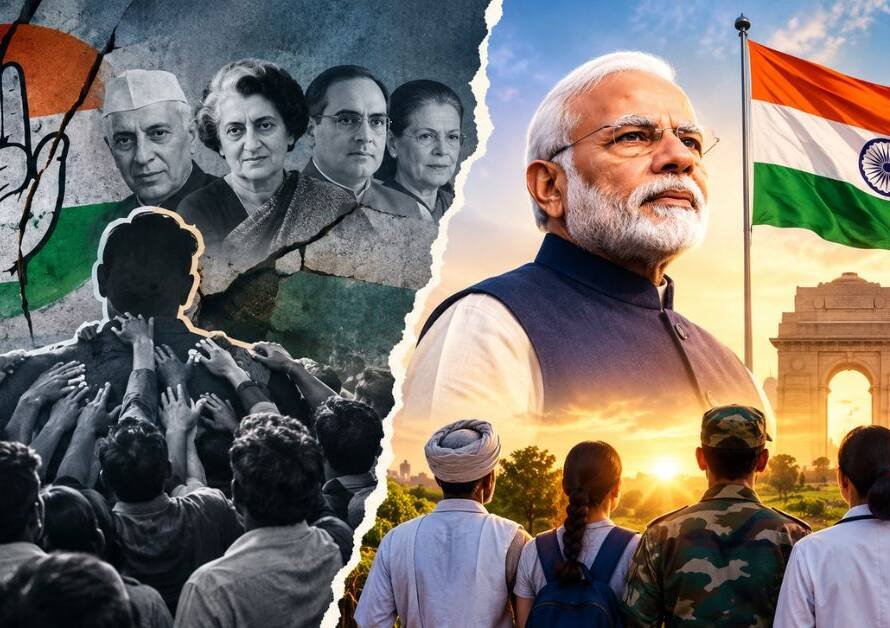
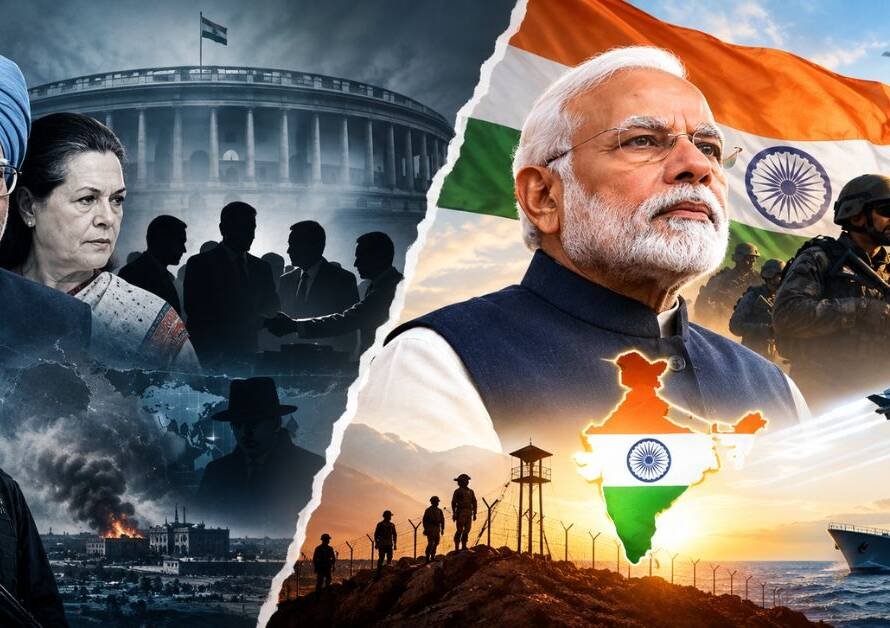
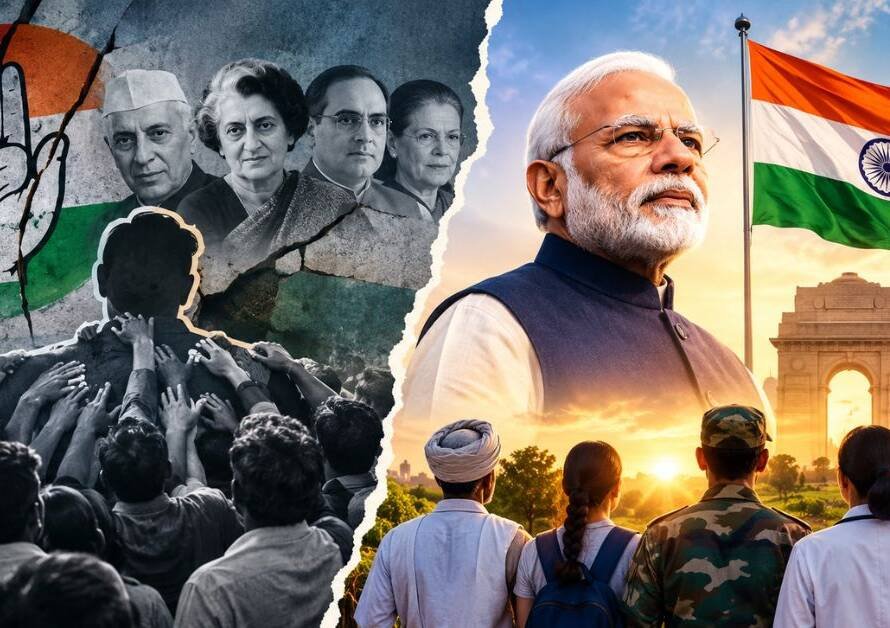
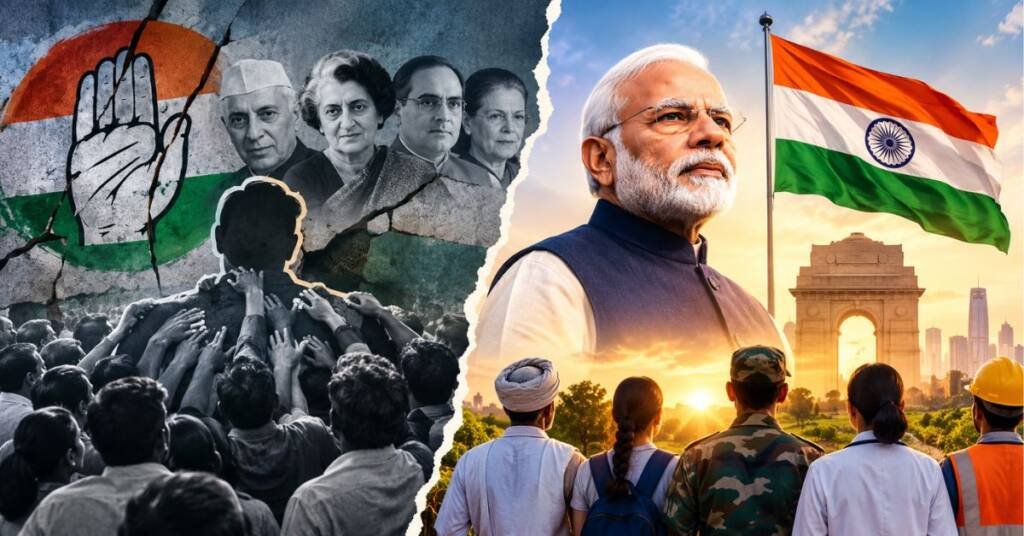
- In the current Indian political landscape, there is virtually no possibility of a revival for Congress. The root cause lies in its adoption of a “Self and Family First” policy over “Nation First,” combined with an ideological drift that leads to tacit or direct support for anti-national and disruptive elements during critical moments.
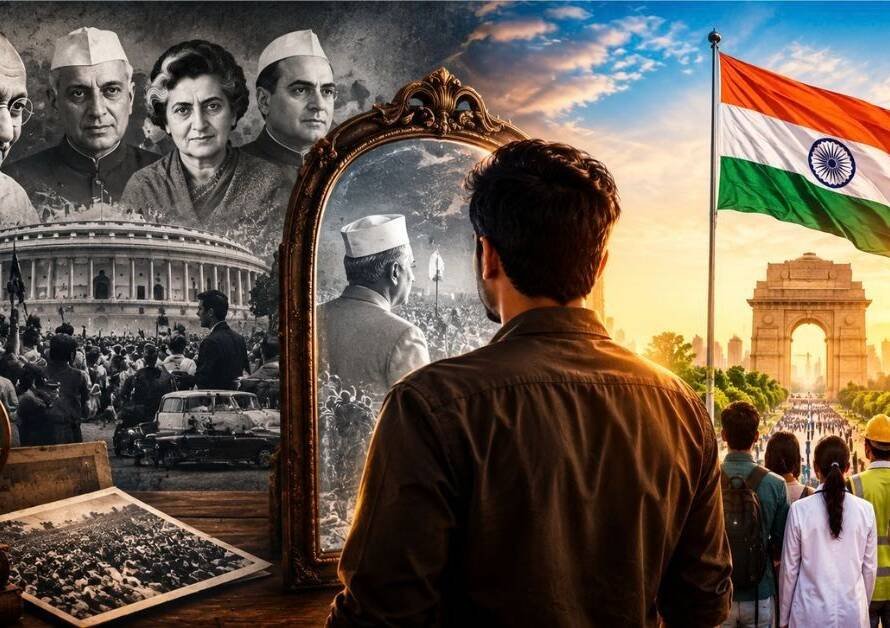
- Over the last 12 years of the Modi era, the citizens of India have experienced firsthand what transparent, ethical, and growth-oriented governance looks like.
- Today’s conscious electorate prioritizes national security and progress above political dynasties and is unwilling to accept any alternative that strays from this “Nation First” commitment.
The Unassailable Reality of ‘Nation First’ in the Modi Era
1. The Politics of Symbols: Personality Cult vs. Ideological Loyalty
The portraits displayed on stage at political events are not merely decorative; they clearly reflect an organization’s philosophy, priorities, and direction:
- The BJP’s Organizational and Ideological Model: At the BJP training camp in Assam, portraits of top leaders representing India on the global stage were absent from the backdrop. Instead, portraits of Dr. Syama Prasad Mookerjee and Pandit Deendayal Upadhyaya were placed alongside Bharat Mata. This proves that within the organization, the party is greater than the individual, and the nation is greater than the party.
- The Loyalty Model of Left Parties: Despite their shrinking electoral footprint, Left parties continue to display portraits of ideological theorists like Lenin and Stalin at their conferences, highlighting their unwavering commitment to their core doctrine.
- Saraswati Shishu Mandir and National Icons: In Vidya Bharati and Shishu Mandir institutions, rather than displaying portraits of founder Nanaji Deshmukh, reverence is given to Maa Saraswati, Bharat Mata, the Om symbol, and national heroes like Netaji Subhash Chandra Bose, Rani Lakshmibai, and Bhagat Singh—regardless of their political affiliations.
- The Erasure of Ideological Symbols in Congress: Conversely, portraits of original founders and stalwart nationalists like Lokmanya Bal Gangadhar Tilak, Lala Lajpat Rai, Bipin Chandra Pal, and Womesh Chandra Bonnerjee have completely disappeared from modern Congress events.
2. Alienation from Cultural Roots and Ideological Erosion
Over time, Congress’s detachment from its cultural and national roots has been the primary driver of its continuous political decline:
- Abandonment of Cultural Traditions and Symbols: By distancing itself from traditional lamp lighting (Deep Prajwalana), Vedic chanting, and Indian cultural symbols at national events, the party alienated itself from the country’s mainstream socio-cultural ethos.
- Neglect of Foundational Heritage: A party that continues to trade on the names of Mahatma Gandhi and Jawaharlal Nehru has abandoned their core principles (such as Swadeshi, Ram Rajya, and Gram Swaraj) to focus exclusively on preserving the political survival of a single family.
- Lack of Discipline and Ideological Backbone: When senior leaders like Shivraj Singh Chouhan or Vasundhara Raje undergo leadership transitions in the BJP, there is no rebellion because they are bound to a cadre-based ideology. They recognize that positions are temporary, but the goal of nation-building is permanent.
3. The Impossibility of a Congress Revival in the Current Indian Context
In today’s aware and progressive India, there is no room for a Congress comeback due to fundamental ideological and structural factors:
- The “Nation First” vs. “Self First” Divide: Congress policies have consistently prioritized family interest and personal political expediency over national interest—a dynamic the modern voter fully recognizes and rejects.
- Support for Anti-National Elements and Appeasement: By issuing questionable statements on national security, surgical strikes, Article 370, and border standoffs—and aligning with disruptive forces rather than standing firmly with the armed forces and the state—Congress has eroded its public credibility to zero.
- The Impact of the Modi Era (2014–2026): Over the past 12 years, the Indian electorate has experienced an era of governance free from appeasement, grounded in transparency, technology, GIS mapping, and accelerated development.
- The End of Dynastic Politics: Indian citizens recognize that national progress stems from competence, merit, and transparent policy—not dynastic privilege. The public will no longer accept the outdated dynastic model under any circumstances.
4. Three Clear Options for Thoughtful Congress Cadres and Supporters
In private dialogues and social discourse, many rational Congress supporters acknowledge that the party stands on the brink of collapse. They face three practical pathways forward:
- Option 1 — Form a New Ideological Party: Abandon the monopoly of the Gandhi family and the culture of sycophancy to establish a new political alternative built on nationalist and democratic values.
- Option 2 — Internal Revolution and End of Dynastic Rule: Rebel fearlessly from within, dismantle the hegemony of the Nehru-Gandhi dynasty, and restore Congress to its pre-1947 historical and cultural roots.
- Option 3 — Pragmatic Political Realignment (Joining the BJP): Follow the path of visionary leaders like Jyotiraditya Scindia, Himanta Biswa Sarma, and Ashok Chavan by joining a system where national interest, meritocracy, and strong ideology take precedence.
5. A Golden Future Built on ‘Nation First’
- Political opposition cannot succeed merely by criticizing leaders or governments; it demands a constructive ideological vision and a commitment to nation-building.
- Over the past 12 years, the people of India have sent an unequivocal message: the nation has moved far beyond dynasty, corruption, and appeasement politics.
- A “Nation First” ethos, transparent governance, and uninterrupted progress form the bedrock of modern India, leaving no space for directionless or family-centric political alternatives.
🇮🇳Jai Bharat, Vandematram 🇮🇳
Read our previous blogs 👉 Click here
Join us on Arattai 👉 Click here
👉Join Our Channels👈
Reads & Views: 50