Summary
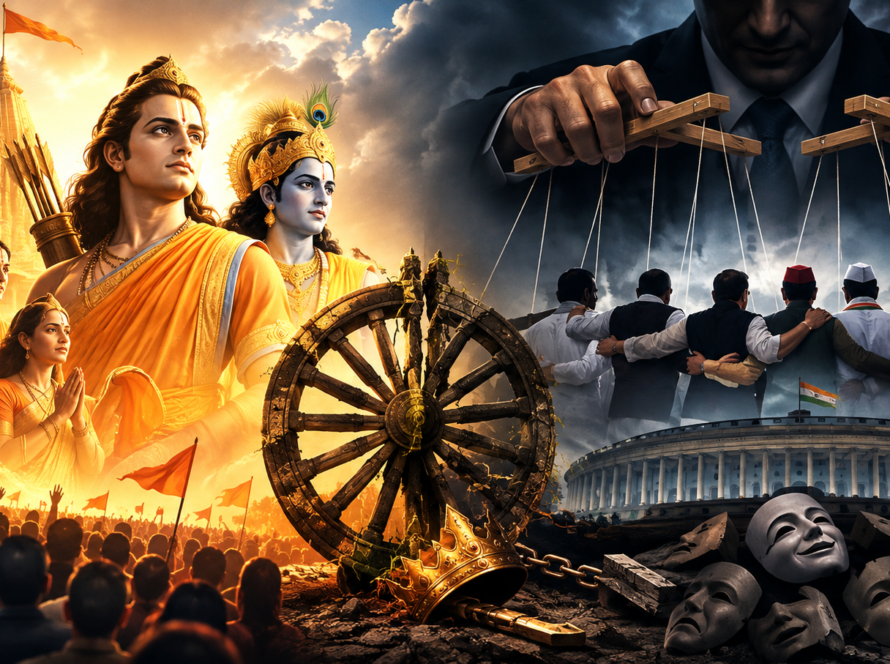
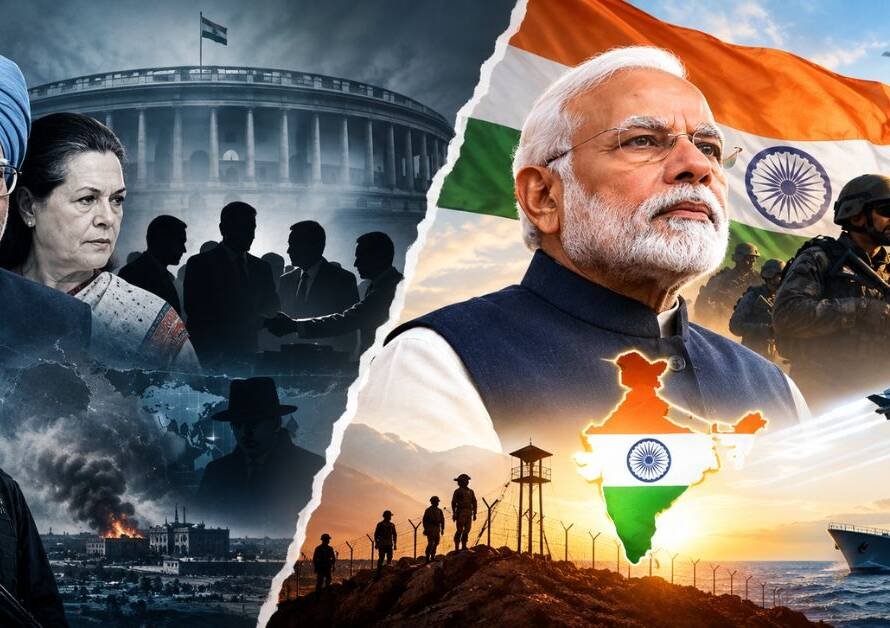
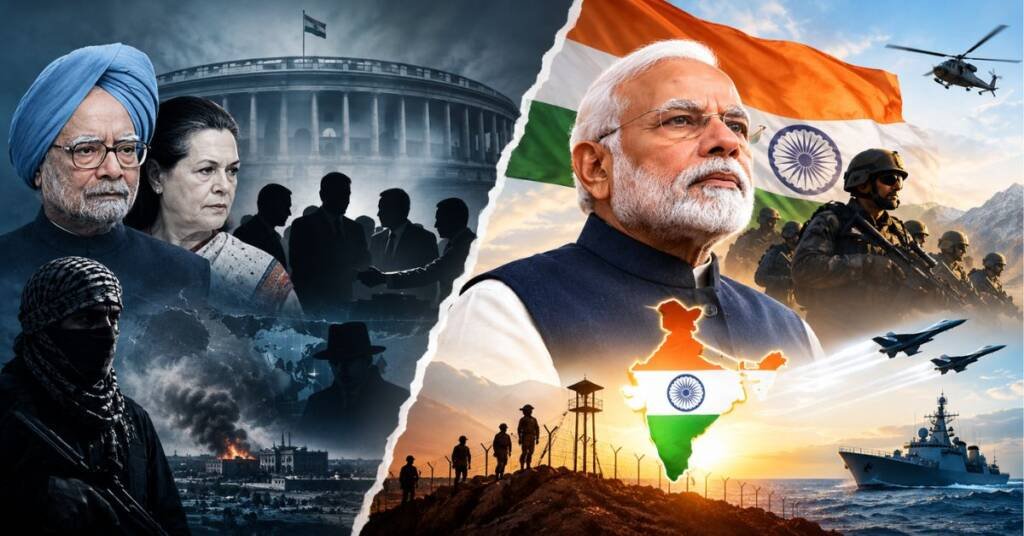
- This detailed and strategic analysis presents an in-depth comparative study of India’s national security policies, diplomatic approaches, and internal security systems from 1991 to the present.
- The article exposes how decisions during the UPA regime—such as foreign NGO funding, ‘Deep State’ interference, the rollback of stringent anti-terror laws, suspicious international meetings, and the release of hardcore terrorists under the guise of ‘goodwill’—handcuffed India’s security agencies and exposed the nation to grave terror strikes like the Pathankot attack.
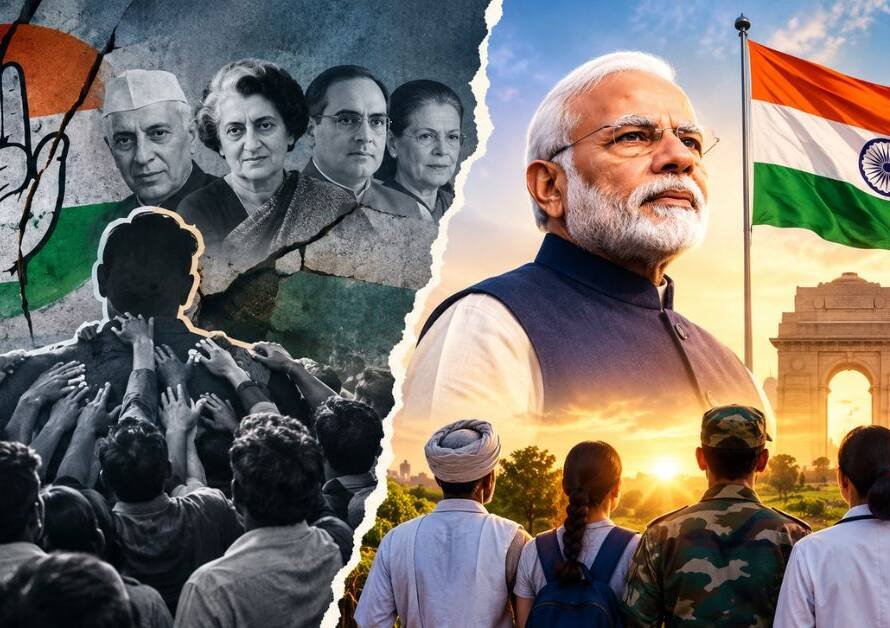
- In stark contrast, it outlines the historic transformation in India’s security paradigm post-2014 under the leadership of Prime Minister Narendra Modi and Home Minister Amit Shah.
- Moving away from ‘dossier diplomacy,’ it details offensive-deterrent military actions (Surgical and Balakot Airstrikes), breaking the backbone of illegal foreign funding through FCRA amendments, the abrogation of Article 370, and the establishment of an unbreachable security architecture under a ‘Zero Tolerance on Terror’ policy.
Deep State’ Collusion vs. The Modi Era’s Unbreachable ‘Nation-First’ Security Model
1. Rise of the Rajiv Gandhi Foundation, George Soros, and the Foreign NGO Network
Just a month after the tragic assassination of former Prime Minister Rajiv Gandhi on May 21, 1991, the ‘Rajiv Gandhi Foundation’ (RGF) was established on June 21, 1991. Its subsequent international activities raise critical questions regarding India’s policy priorities.
- International Branches and Suspicious Timing: In 1993, an international branch of RGF was opened in the United Kingdom. Around the same time, amidst visits to the United States, George Soros established the ‘Open Society Foundations’ in New York.
- FDL-AP and the ‘Free Kashmir’ Agenda: In December 1994, an organization named the ‘Forum of Democratic Leaders in the Asia-Pacific’ (FDL-AP) was formed, with one of its primary objectives being the promotion of the ‘Free Kashmir’ narrative. Sonia Gandhi served as co-chair of this forum in her capacity as RGF Chairperson. This organization was heavily funded by the Soros Foundation.
- NAC and Urban Naxal Network Interference: During the UPA regime, the National Advisory Council (NAC) was created, handing policy-making leverage to individuals directly connected with the ‘Deep State’ and the Soros network. The collaborative work of NGOs like HRLN with RGF highlights how foreign-funded systems were infiltrating India’s administrative and legal frameworks from within.
2. The Kandahar Hijacking, American Interests, and the Birth of Jaish-e-Mohammed
The 1999 Kandahar plane hijacking (IC-814) remains a highly sensitive and complex chapter in India’s diplomatic and internal security history, the linkages of which surfaced in later years.
- Diplomatic Failure in the UAE and US Interference: When the aircraft landed in the UAE to refuel, the US Ambassador was granted direct access while the Indian Ambassador was denied, raising long-standing concerns in security circles.
- Masood Azhar and the FBI’s Suspicious Interest: Terrorists initially demanded the release of 36 militants, but negotiation settled on 3 terrorists, including Masood Azhar. The FBI’s repeated interrogation of Masood Azhar while he was held in an Indian prison between 1995 and 1998 indicates special interest by American agencies.
- Non-Release of ‘Latif’ and the Formation of JeM: Hardcore terrorist ‘Shahid Latif,’ who was on the list of 36 terrorists in 1999, was not released. Following his release, Masood Azhar reached Pakistan and set up the terrorist organization ‘Jaish-e-Mohammed.’
3. Suspicious Foreign Visits of 2001, Parliament Attack, and Repeal of POTA
Political developments between 2001 and 2004 dealt an unprecedented blow to India’s anti-terror defense lines.
- Confidential US Visits and Meeting with Kissinger: In June 2001, Sonia Gandhi visited the United States via tax haven nations alongside key associates, holding high-level closed-door meetings with the Council on Foreign Relations and Henry Kissinger.
- Sequence of the Parliament Attack and Departure: Just months after these confidential foreign trips, Jaish-e-Mohammed terrorists attacked the Indian Parliament on December 13, 2001. Sonia Gandhi’s departure from the Parliament premises moments before the attack remains a subject of political debate.
- Paralyzing Security Infrastructure by Repealing POTA: Upon coming to power in 2004, the UPA government’s first major decision was the complete repeal of the stringent anti-terror law, POTA, effectively tying the hands of investigative and security agencies.
4. UPA’s ‘Goodwill’ Decision, Missing Records, and the Pathankot Attack
Secrecy, weak policies, and appeasement decisions during the UPA rule directly compromised national security.
- Suicidal Release of 25 Terrorists: On May 28, 2010, the UPA government released 25 hardcore terrorists from prison under the guise of ‘goodwill’ with Pakistan.
- The Mystery Behind Shahid Latif’s Release: Among the 25 terrorists released by the UPA, the most shocking name was Jaish-e-Mohammed terrorist ‘Shahid Latif’—the very same Latif whom Indian agencies had refused to release during the 1999 Kandahar hijacking.
- Secrecy of Foreign Trips and the Cost Paid at Pathankot: According to RTI reports, the government maintained no official record of Sonia Gandhi’s foreign travels between 2004 and 2014. Shortly after Sonia Gandhi’s trip to the US on November 30, 2015, a deadly terror attack struck the Pathankot Air Force Station on January 2, 2016. Investigations confirmed that the main mastermind behind this attack was the same terrorist, Shahid Latif, who was released in 2010 by the UPA government as a ‘goodwill gesture.’
5. FCRA Amendments: Amit Shah’s Historic Strike on the ‘Deep State’ and Illegal Funding
Post-2014, the Modi government tightened the legal vise on foreign money networks and missionary funding that were corroding internal security like termites.
- A Single Central Gateway (SBI New Delhi): Every rupee arriving from abroad must now enter exclusively through the designated account at the State Bank of India (SBI) Main Branch in New Delhi, eliminating stealth accounts and parallel funding channels.
- Crackdown on Administrative Extravagance: The ceiling allowing NGOs to spend foreign funds on personal luxuries, five-star conferences, and administrative overheads was aggressively slashed from 50% down to 20%.
- Seizure of Illegal Assets and Government Trusts: Any NGO whose license is canceled due to fraud, conversion rackets, or anti-national activities will have its entire movable and immovable assets transferred under a special government-formed trust. This shattered the backbone of the Western ‘Deep State’s’ parallel funding mechanism.
6. Security Revolution in the Modi Era: End of Dossier Diplomacy and Surgical-Balakot Strikes
Post-2014, India’s foreign and defense policies underwent a fundamental shift, replacing a reactive approach with an offensive-deterrent model.
- 2016 Surgical Strike Post-Uri: Rejecting the old convention of sending dossiers after the Uri attack, India crossed the Line of Control (LoC) to dismantle terror launchpads completely.
- 2019 Balakot Airstrike Post-Pulwama: Responding to the Pulwama attack, the Indian Air Force penetrated deep into Pakistani sovereign airspace to destroy Jaish-e-Mohammed’s main terror training camp in Balakot. This permanently neutralized Pakistan’s nuclear blackmail strategy.
- ‘Zero Tolerance on Terror’ Policy: Security forces and field commanders were granted full operational autonomy to respond immediately and decisively to any provocative actions across the border.
7. Abrogation of Article 370, Stringent UAPA Law, and Internal Integration
By executing legal and geographical integration, the entire ecosystem supporting terrorism was systematically dismantled.
- Revocation of Article 370 (2019): By stripping the special status under Article 370 from Jammu & Kashmir, the state was fully integrated under India’s mainstream constitution, ending political patronage for separatism.
- Total Elimination of the Terror Ecosystem: Beyond neutralizing armed terrorists, networks of stone-pelters, Over-Ground Workers (OGWs), and hawala operatives were exposed and dismantled through stringent NIA crackdowns.
- UAPA Amendments and Legal Rigor: Amendments to the Unlawful Activities (Prevention) Act empowered the government to designate specific individuals as terrorists and seize their personal assets directly.
- Creation of CDS and Integrated Command: To ensure seamless coordination and swift decision-making across all three military branches (Army, Navy, and Air Force), the post of Chief of Defence Staff (CDS) was instituted.
8. ‘Nation First’ as the Foundation of Sovereign India
- This comprehensive comparative analysis of the security models of the UPA and Modi eras clearly underlines that when political appeasement, ‘Deep State’ agendas, and foreign interests take precedence over national security, the nation pays a heavy price in attacks like Pathankot and Parliament.
- Today’s new India does not bow before foreign NGOs, global pressure groups, or appeasement lobbies. The commitment to ‘Nation First,’ stringent FCRA regulations, a tough anti-terror framework, and decisive operational freedom for the armed forces ensure that India’s borders, sovereignty, and cultural integrity remain fully unbreachable.
🇮🇳Jai Bharat, Vandematram 🇮🇳
Read our previous blogs 👉 Click here
Join us on Arattai 👉 Click here
👉Join Our Channels👈