Summary:
- This detailed political and administrative analysis evaluates Rahul Gandhi’s statement claiming that anti-incumbency is an ‘established truth’ of Indian politics.
- The narrative contrasts the 1975 Emergency, the violation of civil rights, and authoritarian decisions with 12 years of corruption-free, transparent governance under PM Narendra Modi.
- Furthermore, drawing upon historical political data from states like Tamil Nadu, West Bengal, Bihar, Uttar Pradesh, and Odisha, it proves that the public mandate is shaped not by hollow slogans, but by a proven track record of good governance, national security, and development.
India’s Changing Political Landscape and the Reality of Anti-Incumbency
I. The Indira Gandhi Era and Emergency: The Real Historical Cause of Anti-Incumbency
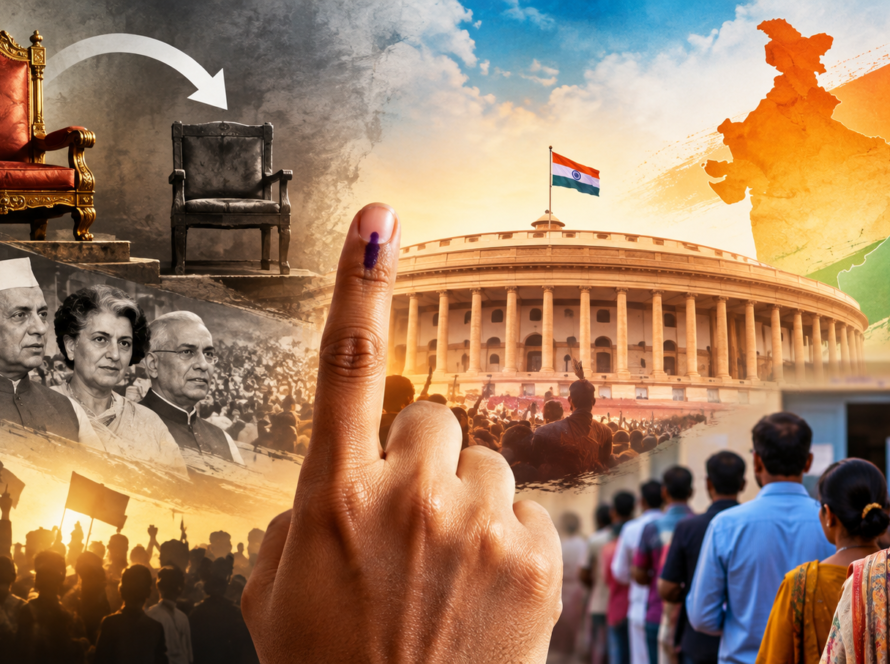
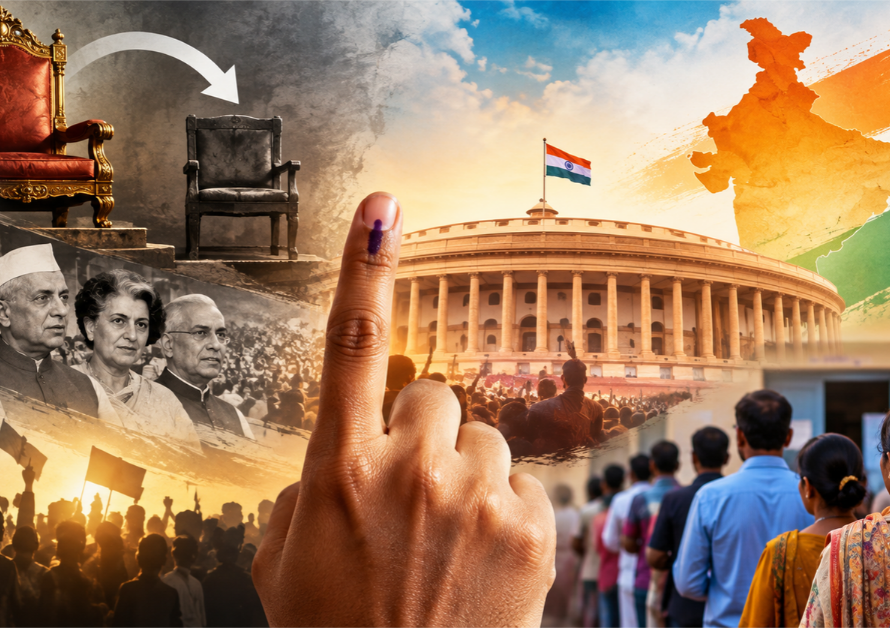
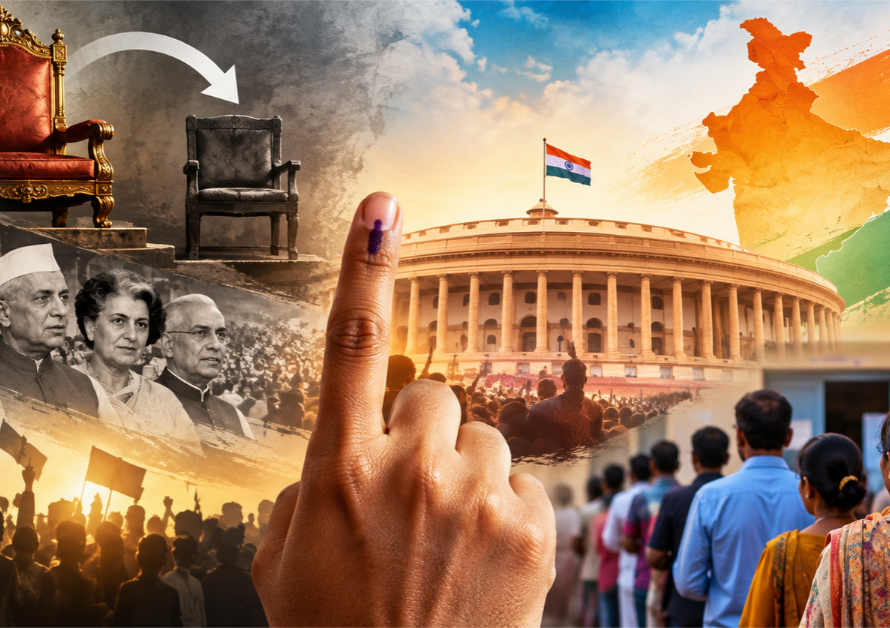
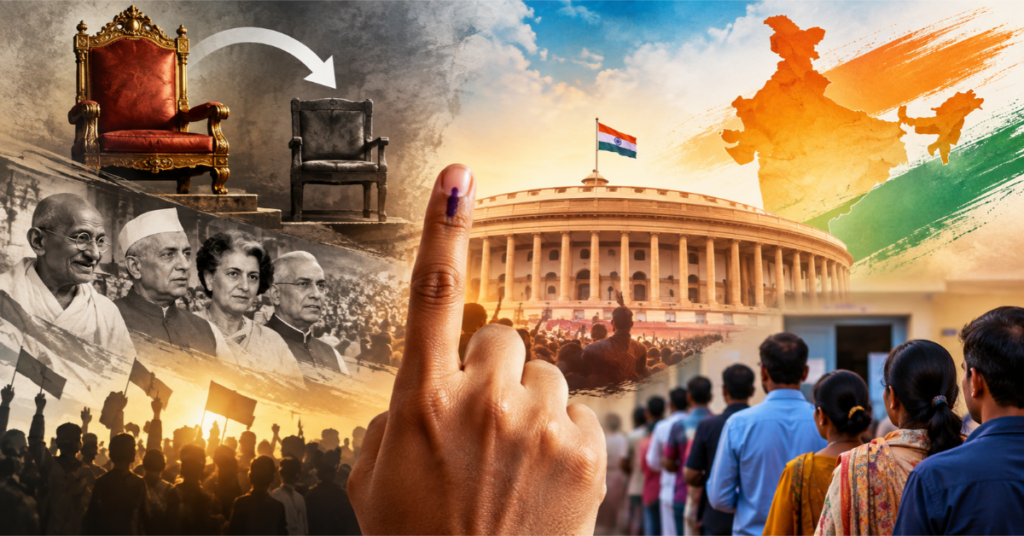
Comparing the anti-incumbency built against Indira Gandhi with the current era underestimates Indian democratic history and public sentiment. Indira Gandhi’s historic defeat in 1977 was not merely the result of a routine political wave; it was an explosion of public outrage against inhuman atrocities inflicted upon citizens.
- Suppression of the Constitution and Destruction of Democratic Institutions: The Emergency forced upon the nation in 1975 shattered the soul of the Indian Constitution. Fundamental Rights of citizens were suspended overnight, judicial powers were curtailed, and the entire nation was turned into a harsh police state.
- Total Erasure of Civil Liberties: Opposition leaders across the spectrum—including Jayaprakash Narayan, Atal Bihari Vajpayee, and L.K. Advani—along with journalists and intellectuals, were jailed overnight without trial. Press censorship was imposed, and any voice raised against the government was silenced with brute force.
- Forced Sterilization and Cultural Authoritarianism: Driven by the arrogance of power, the forced sterilization drive created widespread fear and anger in rural India. Furthermore, strict control was forced upon cinema and the arts; artists and intellectuals who refused to bow down had their careers destroyed.
- Suppression of Democratic Consciousness: The regime believed power could be sustained indefinitely through fear and oppression. However, the enlightened citizens of India completely shattered this delusion in the 1977 elections.
II. Good Governance, Integrity, and Public Trust: The 12-Year Track Record of the Modi Government
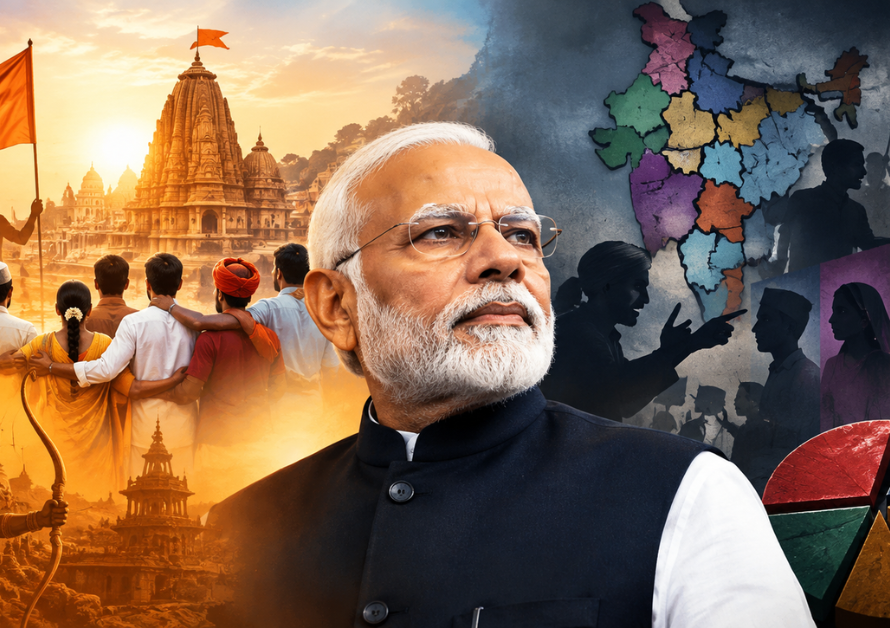
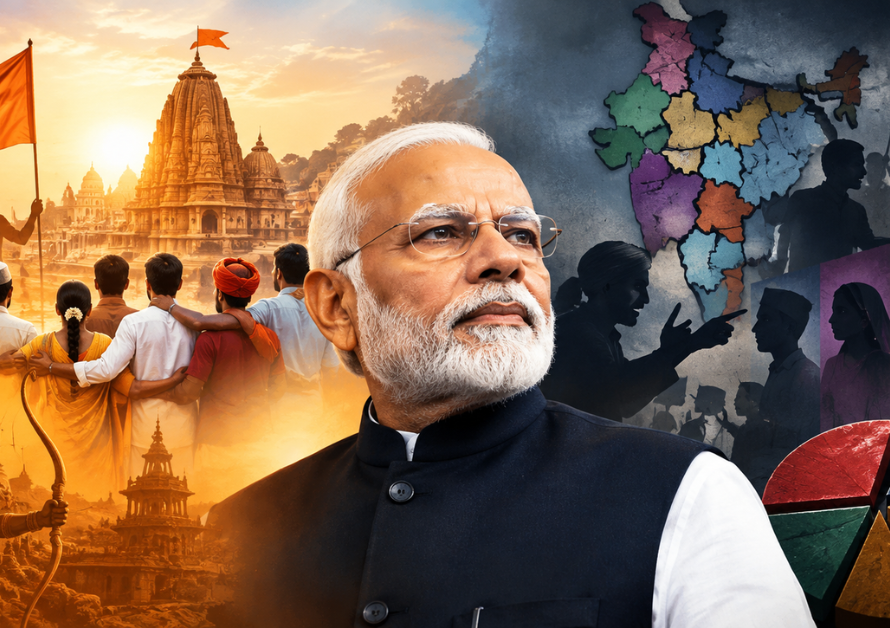
Anti-incumbency does not arise automatically; it emerges when governments indulge in corruption, suffer policy paralysis, and weaken national security. The primary reason no national anti-incumbency has formed against the current central government is its governance model over the past 12 years.
- Corruption-Free and Transparent Administration: Unlike the pre-2014 era—marred by daily financial scams (2G, Coal, Commonwealth Games)—no proven allegations of policy corruption or mega-scams have surfaced against the central government in over a decade. Direct Benefit Transfer (DBT) and digital governance have dismantled intermediary networks.
- Nation-First and Historic Infrastructure Development: Firm stances on border security, decisive actions like surgical and air strikes against terrorism, and rapid expansion of highways, railways, and digital connectivity have built strong public confidence that the nation’s leadership is secure.
- Delivery of Welfare Schemes to the Last Mile: Welfare initiatives like Housing Schemes, Ujjwala, Jan Dhan, and Ayushman Bharat have delivered direct relief to the poorest and most marginalized sections without discrimination, generating deep public trust.
- Economic Stability and Global Credibility: Steering India’s economy forward amid global uncertainties and enhancing the nation’s international standing reflect the strategic success of this administration.
III. The Congress-Ruled State Model and Appeasement Politics
When a political party claims to offer a national alternative, citizens first assess the performance, financial health, and policies of the states it governs.
- Absence of a Concrete Development Model: In states like Telangana, Himachal Pradesh, Karnataka, and Kerala, Congress and its allies have failed to present an exemplary administrative model that inspires national confidence. On the contrary, excessive reliance on freebie schemes has triggered financial distress in several states.
- Appeasement-Based Resource Allocation: In states like Karnataka, policies prioritizing specific vote banks in government contracts and resource allocations clearly demonstrate a focus on narrow vote-bank politics over merit, justice, and equality.
- The Fear of No Alternative (TINA Factor): Aware voters recognize that replacing a strong and stable government with an unaligned, directionless coalition could drag the country back to the instability, corruption, and economic slowdown of the 1990s.
- Internal Friction and Administrative Inertia: In states governed by opposition coalitions, persistent infighting over leadership creates administrative uncertainty and stalls developmental projects.
IV. Provincial Political History and the Truth About Permanent Anti-Incumbency
The claim that “anti-incumbency is an established truth in this country that changed only after the BJP arrived” reflects a misunderstanding of India’s state-level political history. History proves that when satisfied, voters repeatedly choose the same party or ideology for decades.
- Tamil Nadu (Since 1967): Congress has been unable to return to power in Tamil Nadu for nearly six decades since 1967. Regional parties like the DMK and AIADMK have dominated long before the BJP expanded nationally.
- West Bengal (1977–2011): The Left Front ruled West Bengal continuously for 34 years. If anti-incumbency were an unavoidable rule in every election, the Communists would not have stayed in power for over three decades.
- Uttar Pradesh and Bihar (Since 1989–1990): Congress has been sidelined in Uttar Pradesh since 1989 and in Bihar since 1990. In Bihar, Lalu Prasad Yadav and his party ruled for 15 consecutive years through repeated mandates.
- Odisha and Tripura: Naveen Patnaik’s continuous tenure of over two decades in Odisha and decades of Communist rule in Tripura confirm that voters consistently reward good governance, stability, and public welfare.
- BJP Continuity in Gujarat and Madhya Pradesh: Over three decades of BJP governance in Gujarat and long continuity in Madhya Pradesh demonstrate that when a government delivers on development and public aspirations, the anti-incumbency theory becomes entirely ineffective.
V. Electoral Integrity vs. The Old Era of Rigging and Booth Capturing
A dark chapter in Indian democracy involved election outcomes decided by muscle power and electoral malpractices rather than the genuine choice of the people.
- The Era of Booth Capturing and Violence: In earlier decades, particularly under Congress-led eras, ballot boxes were looted, proxy voting was rampant, and innocent people lost their lives to electoral violence.
- Technological Transparency and Fairness: Today, transparent systems like EVMs (Electronic Voting Machines) and VVPATs, combined with strict oversight by the Election Commission, have made the electoral process secure and fair. Every single vote translates directly into the final result, reflecting true public mandate.
- The End of Muscle Power: Integrating technology into elections ended vote hijacking by booth captors and musclemen, establishing genuine democracy.
VI. Conclusion: The Decision of a Mature Indian Electorate
- The absence of anti-incumbency is neither a fluke nor a failure of democracy; it is proof of the growing political maturity of Indian voters.
- Today’s citizens are not swayed merely by slogans, false promises, or caste calculations. They remember historical mistakes, evaluate present transparent governance, and cast their votes based on future stability.
- Until the opposition presents concrete policies, transparent leadership, and a clear roadmap for nation-building, calling for ‘change’ alone will not translate into a popular mandate.