Summary
- In the contemporary global and domestic landscape, India stands at an exceptionally sensitive, decisive, and historic juncture. The Ukraine-Russia conflict, the economic and social collapse of Pakistan, political anarchy in Bangladesh, and the economic crisis in Sri Lanka are stark reminders that shortsighted, inexperienced leadership—or leaders acting as puppets of foreign powers—can push any thriving nation toward ruin.
- Over the past 12 years, India’s unprecedented achievements in national security, Sanatana renaissance, economic resilience, and global stature stand out as extraordinary milestones.
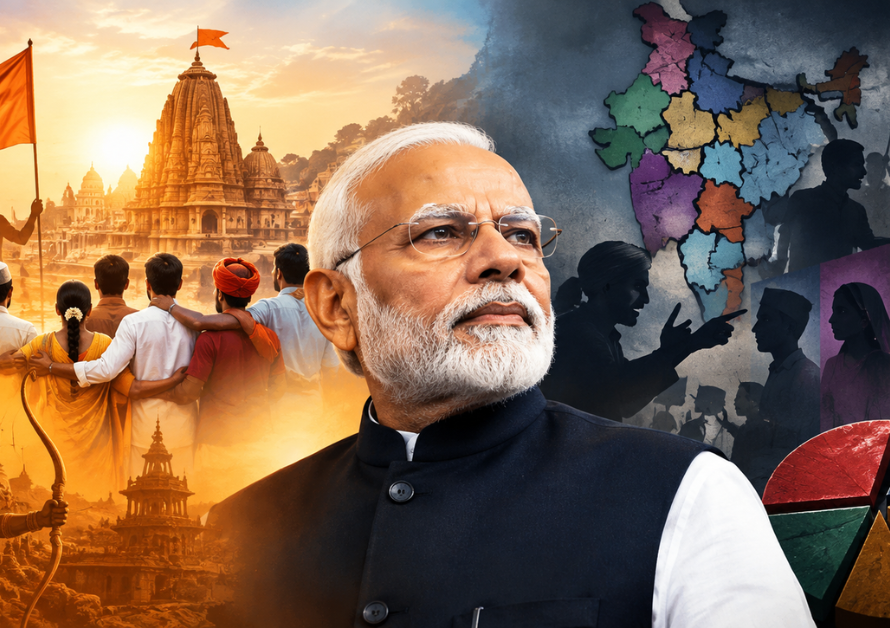
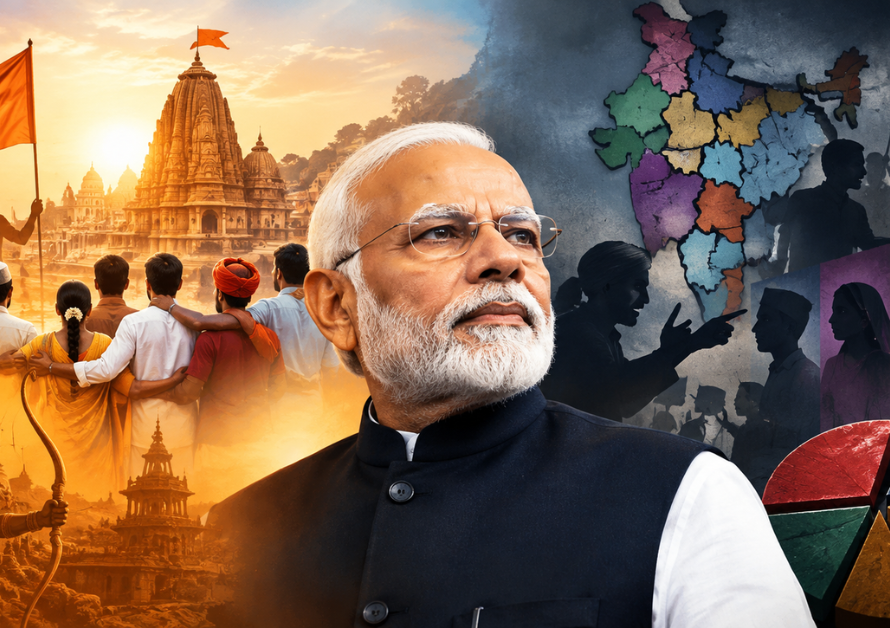
- However, an anti-national ecosystem, ‘deep state’ actors, and opposition groups—having been repeatedly defeated through democratic processes—have now resorted to a multi-front ‘Narrative War.’ The primary objective of this global and domestic nexus is to undermine the credibility of constitutional institutions, widen caste and regional fault lines within Hindu society, and fabricate artificial public discontent through organized demonstrations to destabilize the country’s growth trajectory and current leadership.
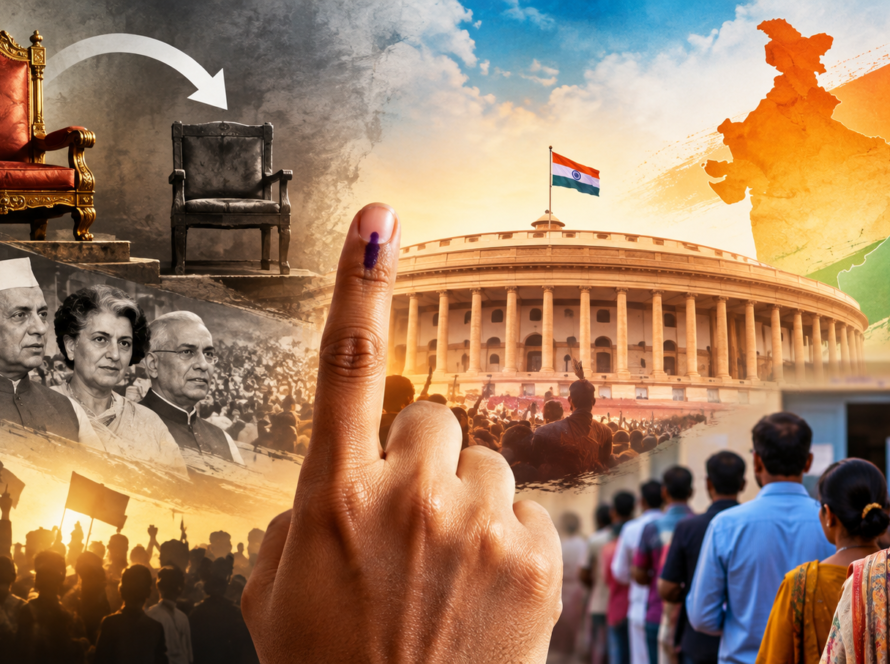
- The orchestrated attack on the Election Commission of India (ECI), coming immediately after a court order regarding Sonia Gandhi’s citizenship and the 1980 electoral roll controversy, is a textbook example of this narrative war. The artificial unrest generated in 2026 is, in reality, part of a strategic siege aimed at the 2027 Uttar Pradesh Assembly elections.
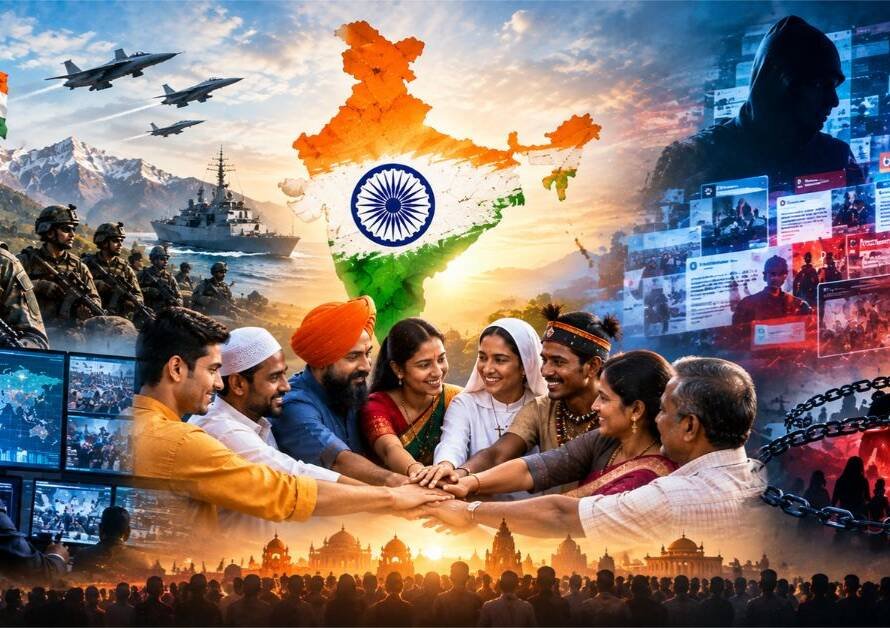
- It is imperative for Indian patriots, conscious citizens, and the broader Sanatana society to rise above personal interests and caste divisions, unite under the banner of ‘Nation First,’ dismantle these false digital narratives with verified facts, and prevent India from being derailed on its path to becoming a global superpower.
Understanding Narrative War and Institutional Challenges in India
1. Introduction: Immediate Discontent vs. Civilization Struggle
The ultimate test of political and civic consciousness lies in a society’s ability to distinguish between transient grievances and long-term national interests.
- Limits of Democratic Dissent: Differences of opinion regarding administrative policies, tax structures, or local governance are natural in a democracy. Indeed, vibrant debate is a sign of a healthy society.
- The Question of Existence: However, when challenges transcend policy critiques and target national integrity, sovereignty, and Sanatana identity, prioritizing internal squabbles over national interest becomes catastrophic.
- The Analogy of the ‘House Lion’: As the old adage goes—no matter the internal grievances, do not slay the ‘lion of your own house,’ or the jackals outside will tear you apart. If a society undermines its own protectors due to temporary frustration, external disruptive forces will lose no time in tearing the nation to pieces.
2. Geopolitical Lessons & The Ukraine Tragedy: The Real Cost of External Crutches
The ongoing crisis in Ukraine is not merely a military conflict; it is a grim case study in how a nation pays a devastating price when leadership indulges in populist rhetoric and relies on foreign promises.
- The High Price of Illusions: A whole nation was dragged into war chasing the illusion of NATO membership, resulting in the complete destruction of its core infrastructure.
- Irreparable Loss: Ukraine permanently lost over 30% of its territory, over 400,000 citizens lost their lives, and millions were displaced as refugees.
- Diplomatic Disillusionment: The hesitation of Western powers to grant formal NATO membership proved that national security cannot be built on foreign crutches.
- Lessons from Neighbors:
- Pakistan: Driven by radicalism, appeasement politics, and mortgaging sovereignty to foreign powers (US and China), it stands on the brink of becoming a failed state.
- Sri Lanka & Bangladesh: Lax internal security, political instability, and foreign debt traps reduced rapidly growing economies to chaos almost overnight.
3. Citizenship Chronology and the Sudden Attack on the Election Commission
Institutional attacks on constitutional bodies often coincide with major legal setbacks or unfavorable judicial rulings involving prominent political figures.
(A) Legal Chronology of Citizenship & Electoral Rolls
- 1968 to 1972: Sonia Gandhi married Rajiv Gandhi in 1968 while holding Italian citizenship. During the births of Rahul Gandhi (1970) and Priyanka Gandhi Vadra (1972), she remained an Italian citizen.
- 1980 Voting Rights: In the 1980 Lok Sabha elections, her name was included in the electoral roll for the New Delhi parliamentary constituency, and she cast her vote—despite acquiring official Indian citizenship only in 1983 (15 years after her marriage).
(B) Judicial Proceedings & Revision Orders (2025–2026)
- August–December 2025: A petition seeking an FIR against Sonia Gandhi for registering as a fraudulent voter was filed in Delhi’s Rouse Avenue Court.
- September 22, 2026: The Sessions Court set aside the Magistrate’s earlier dismissal order and directed a fresh hearing on the matter.
(C) Institutional Attack & The ‘Hit Job’
- The Indian Express Report (September 23, 2026): Just one day after the court order, a news report targeting Chief Election Commissioner (CEC) Gyanesh Kumar was published to divert public attention.
- Facts vs. Narrative: The Election Commission is a three-member body where decisions are made by majority (2-1 or 3-0). All final decisions, including the Special Summary Revision (SIR), bear the formal signatures of all three Commissioners. Framing routine administrative dissent notes as “dictatorship” or a “coup” is a classic media hit job.
4. Foreign Funding, ‘Deep State,’ and the Trap of Caste Discontent
Cinematic portrayals (such as the blockbuster Dhurandhar) and real-world geopolitical examples illustrate how foreign funds and ‘deep state’ networks operate to destabilize a nation internally.
- The True Purpose of Funding: Foreign funds are rarely spent merely on gathering crowds for rallies. Instead, large portions are funneled to social media influencers, mainstream media outlets, and commentators to manufacture ‘negative narratives.’
- A Pattern of Failed Experiments: After campaigns around “EVM hacking,” “temple fund theft,” “Ambani-Adani,” and “ethanol” failed to generate public outrage, the ecosystem targeted society’s most sensitive fault line—caste identities.
- From UGC Guidelines to Reservation & Atrocities Act:
- When the government responded decisively to the UGC guidelines controversy, opposition strategists quickly tied the issue to ‘reservations’ and the ‘SC/ST Atrocities Act’ to keep public resentment simmering.
- The Political Dilemma: These issues create a political dilemma for any ruling party—supporting one side risks alienating the general category (15–17%), while opposing it risks alienating other major voting blocs. Opposition networks exploit this silence to project that “the government does not care about you.”
5. Why Manufactured Unrest in 2026? The Siege of the 2027 UP Elections
Understanding the political timeline behind the sudden spike in anti-government sentiment in 2026 is critical.
- 2029 Lok Sabha Elections Are Distant: Prime Minister Modi won a mandate in 2024, and the next general elections are scheduled for 2029. Generating intense central government opposition in 2026 makes little strategic sense on its own.
- The Real Target — Uttar Pradesh (2027):
- The Uttar Pradesh Assembly elections are due in a few months (2027).
- By targeting the central leadership, the ecosystem is attempting to build a social and political trap around UP Chief Minister Yogi Adityanath.
- Following the Bengal model, the goal is not necessarily to offer a positive alternative, but to leverage “negative polarization” to defeat the incumbent government.
6. Sanatana Unity & Strategies to Dismantle the ‘Narrative War’
To dismantle the disinformation spread by anti-national networks, patriotic citizens and civil society must take an active role online and on the ground.
(A) ‘Fact-First’ Strategy & Digital Counter-Attacks
- Strike with Verified Data: Counter misleading claims using primary sources—official government data, gazette notifications, PIB Fact Checks, and certified court orders rather than emotional arguments.
- Expose Digital Manipulation: Uncover out-of-context video snippets, doctored images, and bot-driven trends coordinated by bad-faith accounts.
- Expose Past Misdeeds: Bring to light the past anti-national statements, corruption scandals, and appeasement politics of opposition actors to silence bad-faith narratives.
(B) Hindu Unity Beyond Caste & The ‘Nation First’ Pledge
- Reject Caste Divisions: Drawing from the teachings of Chanakya, recognize that divisive forces seek to fragment the country. Rise above narrow caste interests and embody ‘Sanatana Unity.’
- Identify Manufactured Protests: Recognize cadre-driven political theater for what it is, rather than mistaking staged demonstrations for genuine national sentiment.
- Build Constructive Discourse: Highlight India’s economic growth, defense self-reliance, infrastructure development, and cultural revival across digital platforms.
7. Conclusion
- History demonstrates that nations that fail to respect their defenders, distrust their constitutional institutions, and fall victim to sponsored narratives eventually crumble.
- The fates of Ukraine, Pakistan, and Sri Lanka serve as clear warnings. It is the duty of every Indian patriot, youth, and conscious voter to identify internal plots, reject actors who compromise national security for personal ambition, and stand united under the principle of ‘Nation First’ to ensure India’s security, social harmony, and civilization resurgence.
🇮🇳Jai Bharat, Vandematram 🇮🇳
Read our previous blogs 👉 Click here
Join us on Arattai 👉 Click here
👉Join Our Channels👈