Summary:
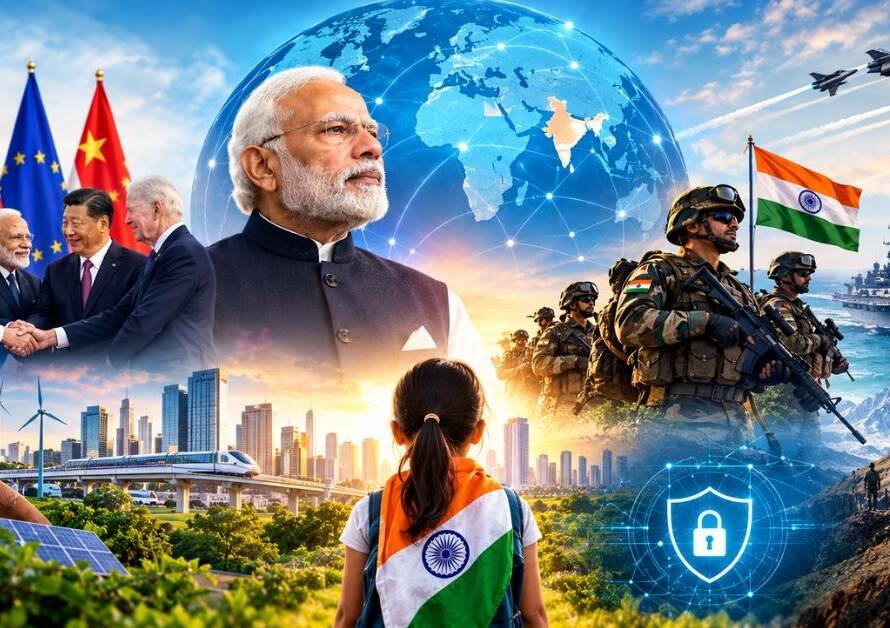
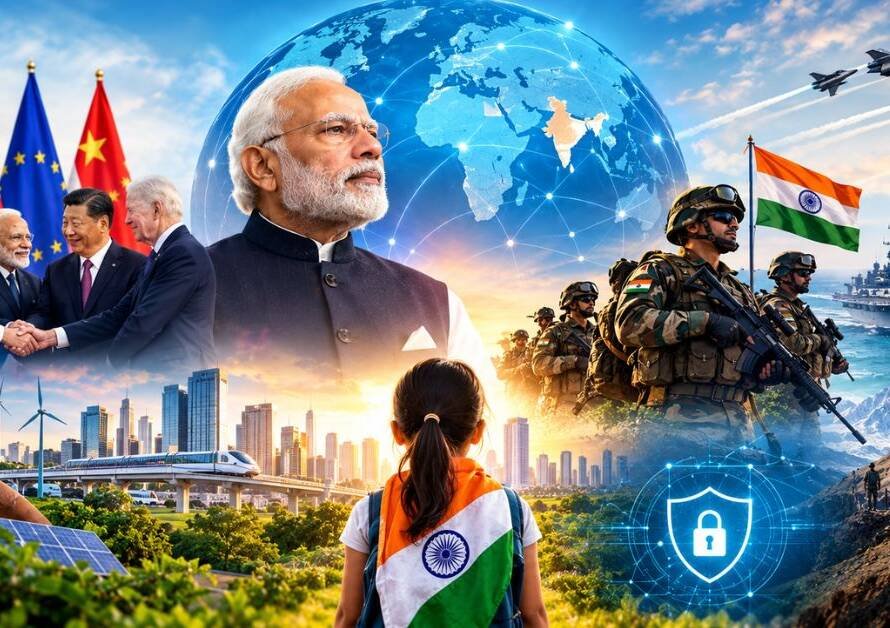
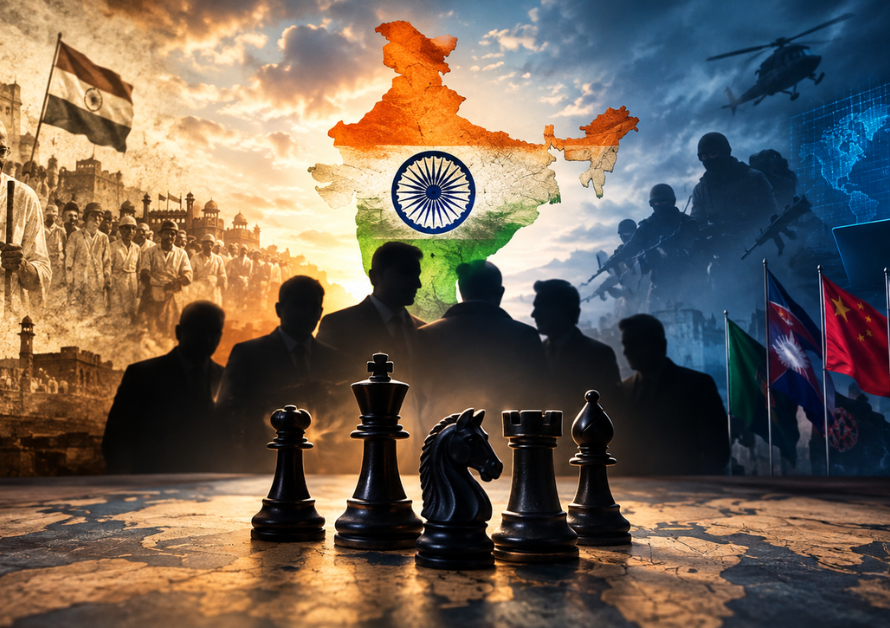
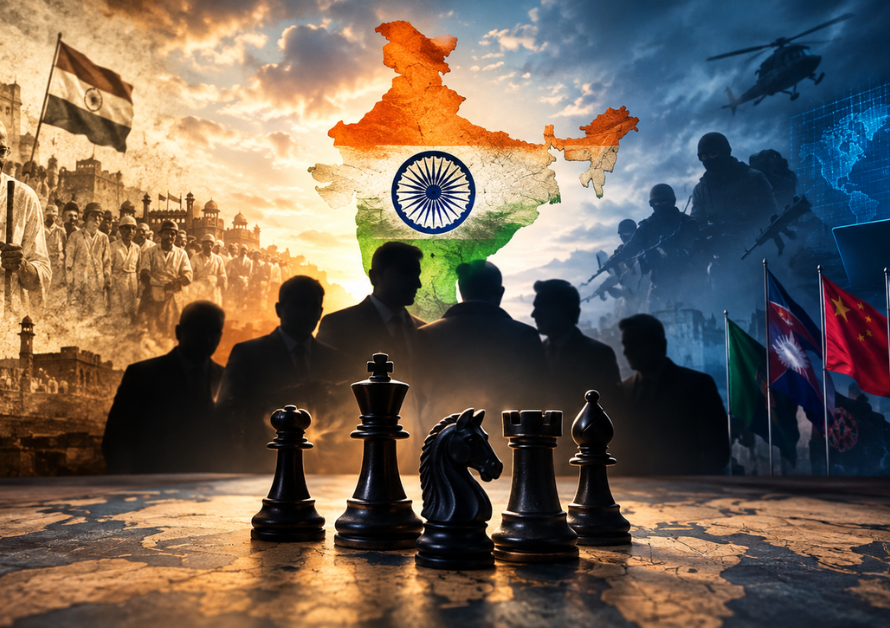
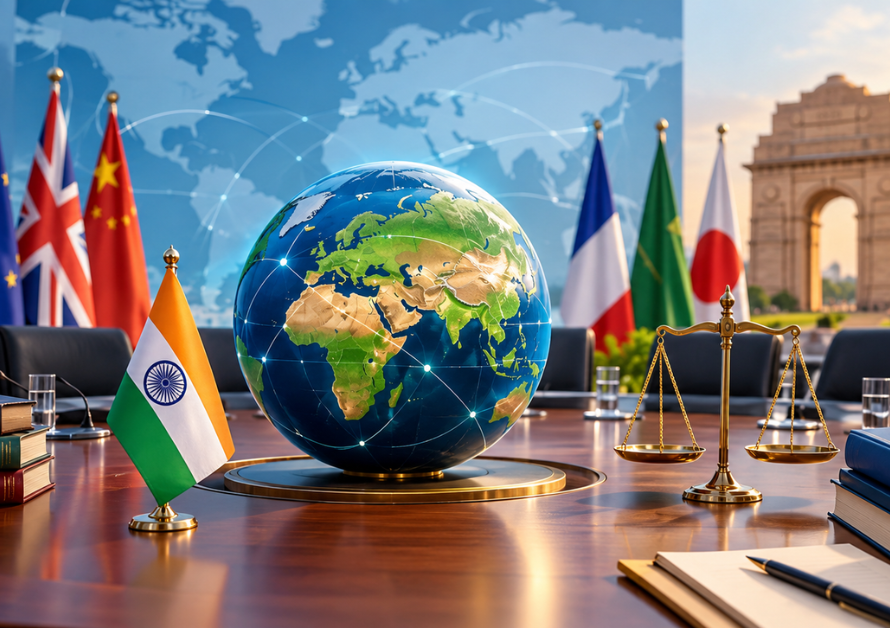
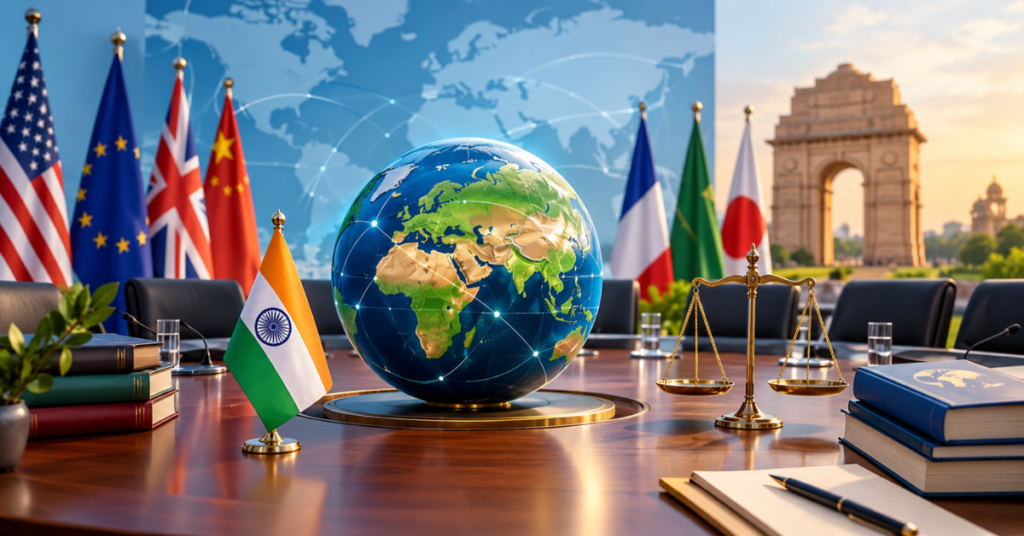
At an international summit held in Delhi, global leaders gathered to debate the most pressing question of international politics: “How can world peace be achieved?” On this global platform, India addressed the biggest hypocrisy of Western and global diplomacy without hesitation—double standards on terrorism and diplomacy. This narrative presents a satirical and strategic analysis of India’s emerging indigenous stance as the voice of the Global South, its demand for fair and uniform rules, and its historic effort to reshape the international geopolitical dictionary.
India’s Foreign Policy And The Changing Global Order
1. The Reality Of International Diplomacy And The Definition Of Peace
For decades, nations across the world have assembled at various international conferences to deliberate on “peace.” It has long been a diplomatic convention that powerful nations deliver speeches on peace while simultaneously waging wars to maintain strategic balance, ensuring no shortage of debate.
- Background Context of the Summit:
- The summit in Delhi brought together representatives from Russia, China, Iran, and various continents across the globe.
- The posture of many delegates depended heavily on assessing whether drawing closer to India would anger the United States, or whether drawing closer to the United States would displease India.
- The Paradox of Peace and War:
- While powerful nations have discussed peace building for years, arms supplies and military interventions remain central tools of their foreign policies.
- India challenged this pretense directly, asserting that as long as there is no clear and uniform policy on terrorism, talks of global peace remain nothing more than a diplomatic formality.
2. The Terrorist’s Passport, Diplomatic Utility, And India’s Stance
In international politics, terrorism has often been defined not by the destruction it causes, but by its “diplomatic utility.”
- Convenient Definitions:
- A terrorist targeting one nation is labeled a “freedom fighter” by another.
- For a third country, he becomes a “strategic asset,” and for a fourth, a “voice of regional resistance.”
- However, when that same individual carries out an attack inside a Western or powerful nation, his diplomatic status instantly changes to “terrorist.”
- India’s Clear and Firm Message:
- India stated firmly that a terrorist must be identified by his actions, not by his passport, attire, or political background.
- Whether a terrorist sports a beard or wears a suit, belongs to a banned organization, or is an unofficial state guest—terrorism is simply terrorism.
- The Silence of Global Powers:
- As India raised this issue, a heavy silence fell over the conference room—a silence revealing how global powers habitually avoid confronting their own double standards on terrorism.
3. ‘Our Terrorists Vs. Your Terrorists’: Striking At Double Standards
When a veteran international expert quietly asked, “Is it not necessary to look at who the terrorism was used against?” India’s response exposed the hollow core of international foreign policy.
- Exposing Enmity-Based Conclusions:
- India clarified that if a group targets your enemy and you remain silent, you are not against terrorism; you are merely against terrorism targeting you.
- The Old Dictionary of International Diplomacy:
- For too long, the world has operated on a hypocritical vocabulary:
- Intervention by a powerful nation: “Strategic Necessity”
- Intervention by a developing nation: “Violation of International Law”
- Our missile: “Deterrence and Security”
- Your missile: “Aggression”
- Our sanctions: “National Security”
- Your sanctions: “Economic Pressure”
- For too long, the world has operated on a hypocritical vocabulary:
- Demanding a Single Standard:
- Without declaring war on anyone, India placed one fundamental demand on the table: “Keep one rule for everyone.”
- If a single standard were truly applied worldwide, the legacy foreign policies of many nations—built on double standards—would become entirely obsolete.
4. Not A ‘Rule Taker’, But A ‘Rule Maker’
There was a time when India was routinely lectured on global platforms about how the world is a complex place and which camp it ought to align with.
- The Era of Strategic Autonomy:
- Today’s India shapes its own foreign policy. It engages simultaneously with Russia, China, Iran, the United States, and European nations.
- India now declares openly on global stages that all its international decisions will be made strictly on the basis of “Nation First.”
- The Strong Voice of the Global South:
- India has made it clear that developing and emerging nations will no longer remain mere “rule takers” abiding by guidelines set by Western powers.
- As a representative of the Global South, India is demanding an equal partnership in the process of becoming “rule makers.”
- Unease Among Global Powers:
- What troubles the traditional custodians of global rules most is that India is no longer just presenting its view, but is moving into a position to assert its terms.
5. The Link Between Global Diplomacy And Domestic Politics
Alongside the international summit in Delhi, domestic political shifts and opposition politics within the country cannot be viewed in isolation from this broader global canvas.
- Global Stature vs. Domestic Contestation:
- While India challenges double standards internationally and establishes its weight at the global table, certain domestic political factions attempt to downplay these global achievements.
- The Impact of Growing Strength:
- What disturbs hostile forces and their supporters most is India’s ability to bring nations with diverse and conflicting interests together around a single table.
- The Imperative of Vigilant Citizenship:
- To maintain India’s international standing and establish it as a “world leader” and “rule maker,” civil society must understand these geopolitical patterns and remain alert against both internal and external disruptions.
🇮🇳 Jai Bharat, Vandematram 🇮🇳
Read our previous blogs 👉 Click here
Join us on Arattai 👉 Click here
👉Join Our Channels👈