Summary
‘India First’ Foreign Policy: Putting India’s Interests Above All Else
1. The True Reality of ‘Outrage’ Against Modi Ji — Who Exactly Is Upset, and Why?
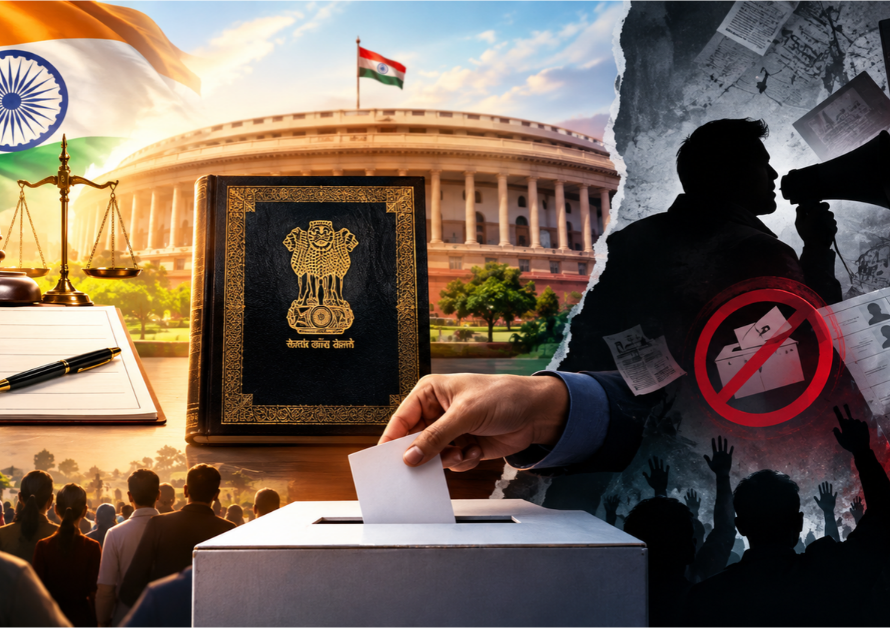
Across the country, certain individuals and special interest groups appear vocal against Modi Ji’s decisions. When examined objectively and deeply, the primary cause of this dissatisfaction is the crackdown on decades-old, flawed systems and illegal networks:
- Closure of over 300,000 Shell Companies: Fake and bogus shell companies existing only on paper were locked down, dismantling the illicit syndicate used for money laundering. Consequently, the operators and beneficiaries behind these fronts are deeply upset.
- Cancellation of 40,000 Fake NGOs: Strict regulations were introduced to halt the misuse of government grants and unverified foreign funding funneled under the guise of social service and development, leaving their controllers distressed.
- Termination of over 10 Million Fake LPG Connections: Cooking gas cylinders that were illegally diverted and sold in the black market were shut down through transparent digital tracking and data verification.
- Cancellation of 15 Million Fake Ration Cards: Government rations meant for the poor that previously ended up in the pockets of middlemen have been completely stemmed from leakage.
- Termination of 195,000 Fake Madrasa Scholarships: Millions of rupees in government fraud were stopped by removing fake student names registered only on paper, making those who profited unfairly uncomfortable.
- Major Progress Through Aadhaar Linking and Transparent Tracking: The implementation of digital systems across various social welfare schemes removed millions of fake and duplicate beneficiaries from the system, ensuring direct benefits (DBT) reach the genuine needy.
2. Groups Affected by Administrative Transparency and the Digital Revolution
When rigorous administrative reforms and technology-driven accountability are enforced in a nation, it is natural for groups benefiting unfairly from the old system to be impacted:
- Middlemen and Brokers: The rollout of Direct Benefit Transfer (DBT) and e-tendering in government schemes brought an end to kickbacks and commissions in public contracts and financial allocations.
- Property Dealers and Black Marketeers: The Benami Transactions Prohibition Act and transparency in digital transactions applied brakes on unaccounted black money and unrecorded investments.
- Tax Evasion Groups: The GST framework and online digital payment systems made business transactions transparent. Approximately 120 million new individuals came under the purview of income tax and the formal economy.
- Lax and Corrupt Administrative Machinery: Biometric attendance and strict work-culture enforcement angered officials and employees who failed to arrive at offices on time or were accustomed to delaying work to demand bribes.
- Those Reliant on Bribery: For individuals who favored paying under-the-table money to get work done rather than following regulations, digital e-governance closed those avenues.
- Long-term Beneficiaries Dependent on Subsidies: Individuals who spent decades enjoying unrestricted access to public resources and facilities without making tangible contributions are also uncomfortable with these reforms.
3. Pre-2014 Scenario — Policy Paralysis and Defensive Diplomacy
While decades-old domestic inefficiencies were overhauled at home, India’s posture on international platforms also underwent a complete transformation post-2014. Analyzing the pre-2014 scenario:
- Lack of Diplomatic Foresight: Prior to 2014, India’s foreign policy appeared driven by immediate circumstances and external pressures rather than a solid, long-term strategic goal.
- Laxity on International Platforms: India’s presence at global summits occasionally fell victim to policy oversight. For example, a former foreign minister accidentally reading another country’s representative’s speech at an international venue raised serious questions about diplomatic diligence.
- America’s Dual Approach: During that era, the world was divided into different superpower blocs. Based on its own geopolitical convenience, the United States would occasionally lean toward India while simultaneously providing financial and military aid to Pakistan, impacting India’s security interests.
- Limited Depth with Russia: India and Russia shared historically friendly relations, but due to Western pressures, commercial and technological cooperation between the two nations never reached its full potential.
- China’s Aggressive Stance: China consistently pursued aggressive policies along border regions, while Indian diplomacy remained largely restricted to defusing or deferring conflicts rather than delivering a firm response.
4. Post-2014 Policy Shift — ‘India First’ and Sovereign Diplomacy
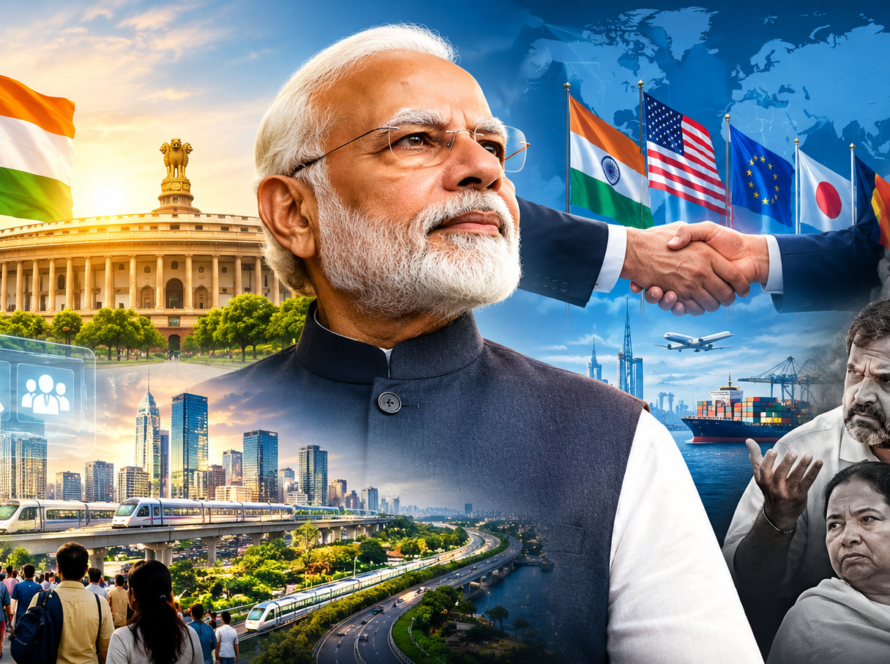
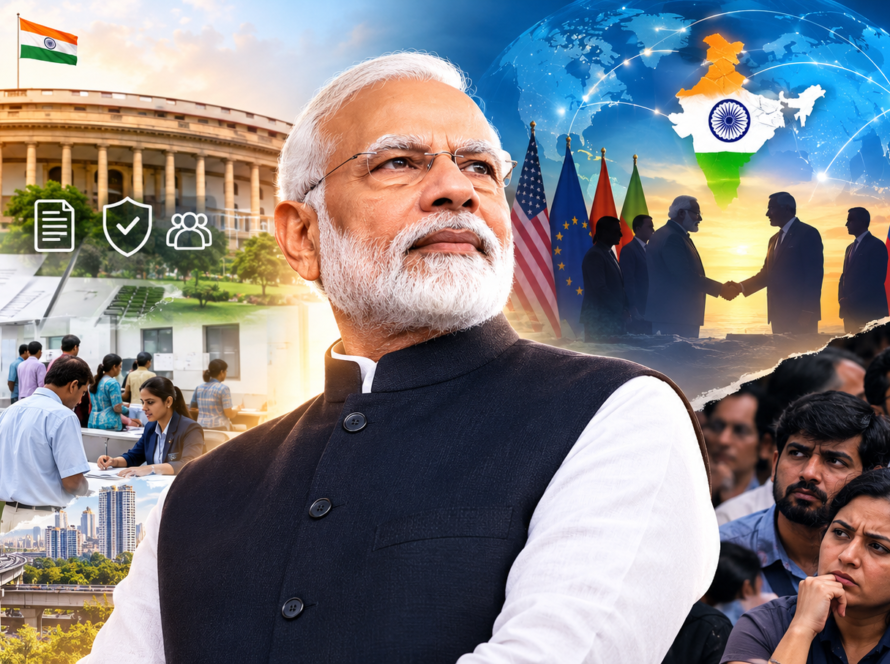
With the political transition in 2014, “New India” restructured its foreign policy and sent a clear message: India will make its own decisions.
- The Core Creed of ‘India First’ and ‘Nation First’: India made it clear that it would not become a follower of any superpower or global bloc. A single foundation was set for India’s foreign policy: national interest, national security, and citizen welfare.
- Strategic Autonomy: India demonstrated to the world that it would not yield to international pressure regarding its energy requirements, defense deals, or commercial decisions.
- Access to Critical Resources: Resources such as Rare Earth Metals, which Australia was once hesitant to grant India access to, are now secured through bilateral agreements (MoUs) signed for uninterrupted supply following diplomatic engagements by Prime Minister Modi.
- Securing Maritime Frontiers: To balance regional dynamics, India significantly reinforced its naval presence and strategic outposts in the Malacca Strait and the Indian Ocean Region (IOR).
5. An Emerging Superpower Amid Global Slowdown and Unprecedented Diplomatic Balance
At a time when much of the world is navigating severe economic stress, inflation, and warfare, India’s steady development has become a global benchmark.
- A Bright Spot in the Global Economy: While major economies from Europe to America face uncertainty, India stands resilient as the world’s fastest-growing major economy.
- Impact on Over Half the World’s Population: India’s role in global supply chains and production capacity has become so decisive that any major disruption in India could adversely impact over half the world’s population. From food security to pharmaceutical supply, India has become an indispensable pillar.
- Hub for Global Pacts: Dozens of nations are actively entering into strategic partnerships and Free Trade Agreements (FTAs) with India to bolster their own economies and expand trade.
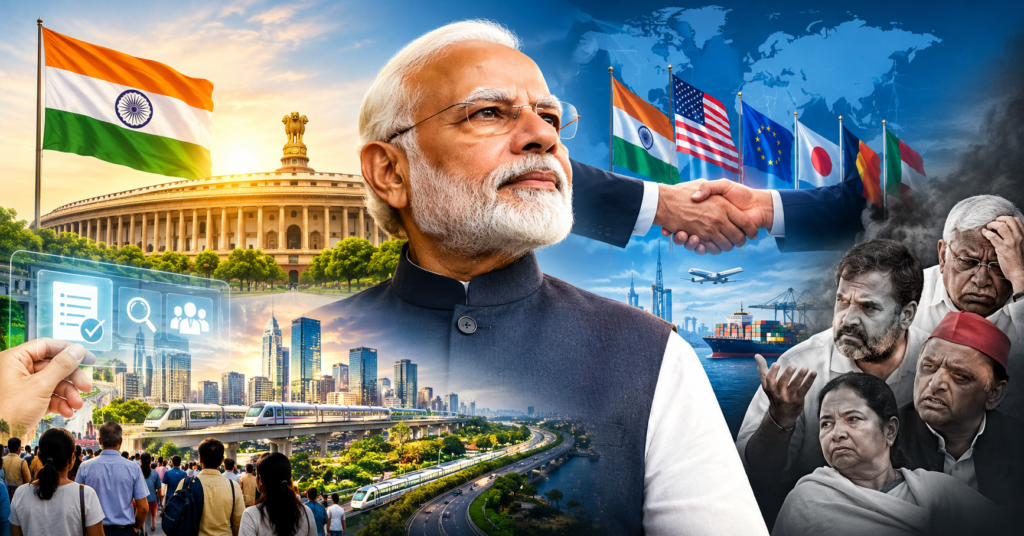
Unprecedented Diplomatic Balance: Today, major global powers with conflicting interests—such as the United States, Russia (under President Putin), France (under President Macron), Israel, Iran (under President Masoud Pezeshkian), and China—are all keen to maintain strategic and economic partnerships with India. India belongs to no single bloc; rather, its doors remain open to any power that aligns with its national
6. Conclusion: A New Chapter of Transformation
- Whether striking at fraud, brokerage, and black money at home through digital revolution or hoisting India’s flag high on the international stage through sovereign diplomacy—the strong foundation of a ‘New India’ has been laid post-2014.
- When decades-old flaws, corruption, and appeasement systems are overturned, it is natural for those Phoopha’s who derived unfair benefits to feel aggrieved and upset.
- When people who understand these structural changes support the nation’s progress, they are labeled with various epithets. Yet the truth remains: Today’s self-reliant India operates on its own terms, promotes ‘Make in India’ for its defense needs, and elevates the pride of the entire nation through its policies.
- This is the strategic, self-respecting, and transparent strength of #NayaBharat that has brought the world to India’s doorstep today.
🇮🇳Jai Bharat, Vandematram 🇮🇳
Read our previous blogs 👉 Click here
Join us on Arattai 👉 Click here
👉Join Our Channels👈