Summary
- This extensive political and economic analysis deconstructs the recent statement made by Congress spokesperson Supriya Shrinate regarding the partial rationalization of electricity tariffs in Uttar Pradesh, where she characterized standard administrative adjustments as an “extortion scheme” (vasooli).
- In response, this narrative provides a robust nationalist perspective that contrasts current infrastructure-driven fiscal reforms with the seventy-year legacy of economic mismanagement under the Congress party, which historically pushed India to the brink of sovereign insolvency.
- Grounded in the eternal principles of “Survival of the Fittest” and a strategic “Tit-for-Tat” engagement model, this analysis calls for the complete dismantling of subversive anti-national narrative networks and celebrates the rise of a self-reliant (Atmanirbhar), secure, and civilizational Bharat.
Congress Rule vs Current Reforms: A Comparative Perspective
I. Ideological Deconstruction of the Opposition’s Rhetoric
The primary objective of the opposition’s digital campaigns is to manufacture artificial public discontent and undermine state infrastructure initiatives. The recent commentary by Supriya Shrinate fits directly into this calculated strategy:
“The double-engine Yogi government in UP has made electricity 10% more expensive; the public is suffering from inflation, and people are struggling to make a basic living—but the BJP’s extortion never stops…”
- Labeling Development Fees as ‘Extortion’: When a decisive nationalist administration introduces a 10% partial tariff adjustment to fund massive infrastructure upgrades, guarantee 24/7 uninterrupted power to remote villages, and modernize the regional energy grid, labeling it as vasooli (extortion) is an insult to basic administrative logic. This is not an arbitrary tax; it is a direct investment in nation-building.
- The Construction of Negative Narratives: Hyperbolic claims that citizens are “struggling to make a basic living” are designed to divert public attention from India’s soaring GDP growth, digital governance revolution, and transparent financial systems. The intent is to breed a false sense of economic insecurity.
- The Fallacy of Populist Economics: Electricity tariffs are determined by independent regulatory commissions to ensure the structural and financial viability of the power grid. By hiding basic economic principles, the opposition seeks only to exploit short-term political anxieties.
II. The Legacy of Fiscal Bankruptcy: Reviewing the 1991 Crisis
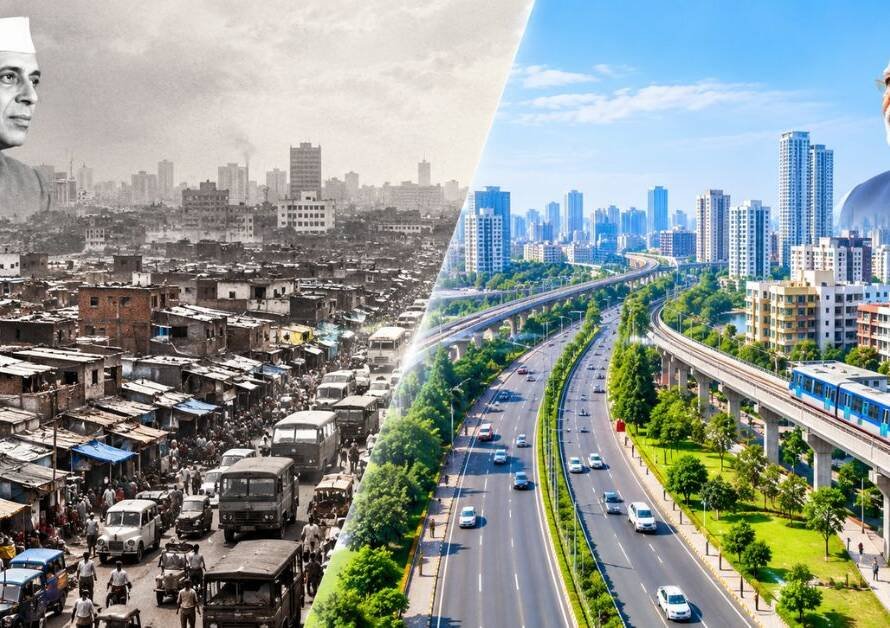
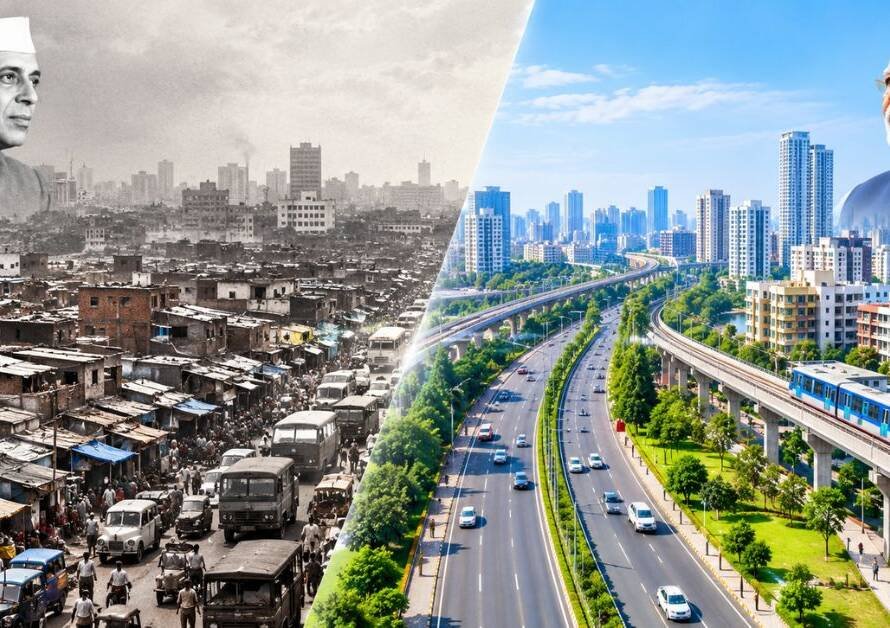
Those who choose to orchestrate political outcries over a necessary 10% utility rationalization must be reminded of the decades of legacy misrule, minority appeasement, and flawed economic planning that historically left India financially paralyzed.
- The 1991 Sovereign Insolvency: Decades of license-quota restrictions, stifling bureaucracy, and cronyism culminated in the catastrophic Balance of Payments crisis of 1991. India’s foreign exchange reserves were entirely depleted, leaving just enough capital to finance two weeks of essential imports, bringing the nation to the absolute edge of default.
- The National Humiliation of Pledging Gold: The economic bankruptcy was so severe that the Congress-backed administration was forced to secretly airlift tons of the Reserve Bank of India’s (RBI) gold reserves to foreign vaults (the Bank of England and the Bank of Union Switzerland) to secure emergency credit. This remains one of the most profound economic humiliations in the history of independent India.
- The Terms of Global Capitulation: During that dark period, global financial institutions and the International Monetary Fund (IMF) refused to grant credit to India without stringently punitive and humiliating conditions, forcing the state to alter its sovereign policies under external pressure.
III. The Era of Institutionalized Loot: A Paradise for Middlemen
Under legacy regimes, systemic financial leakage was not an aberration but an institutional norm. Capital that should have been deployed to reinforce national defense, secure borders, and elevate impoverished communities was routinely siphoned off via massive scams.
- The Siphoning of Public Wealth: Monolithic scandals like the 2G Spectrum case, the Coal Block Allocation (Coal-gate), and the Commonwealth Games scams collectively drained hundreds of thousands of crores from the national treasury, representing a reckless squandering of public assets for pennies.
- The Hegemony of Intermediaries: A former Prime Minister belonging to their own party famously admitted that out of every 1 Rupee dispatched from the central capital for welfare, 85 paise was devoured by corrupt networks and middlemen, leaving a mere 15 paise for the actual beneficiary.
- The Pain of Disintermediation: Now that the implementation of Digital India and Direct Benefit Transfers (DBT) has permanently eliminated these illegitimate income streams, the frustration within this old political ecosystem is entirely predictable.
IV. Survival of the Fittest: A Resurgent Bharat and Assertive Hindutva
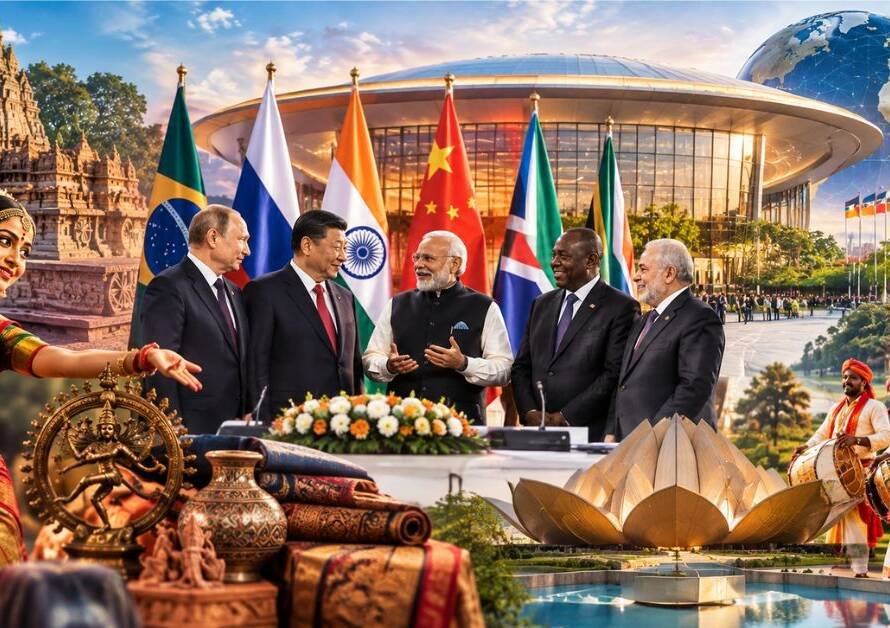
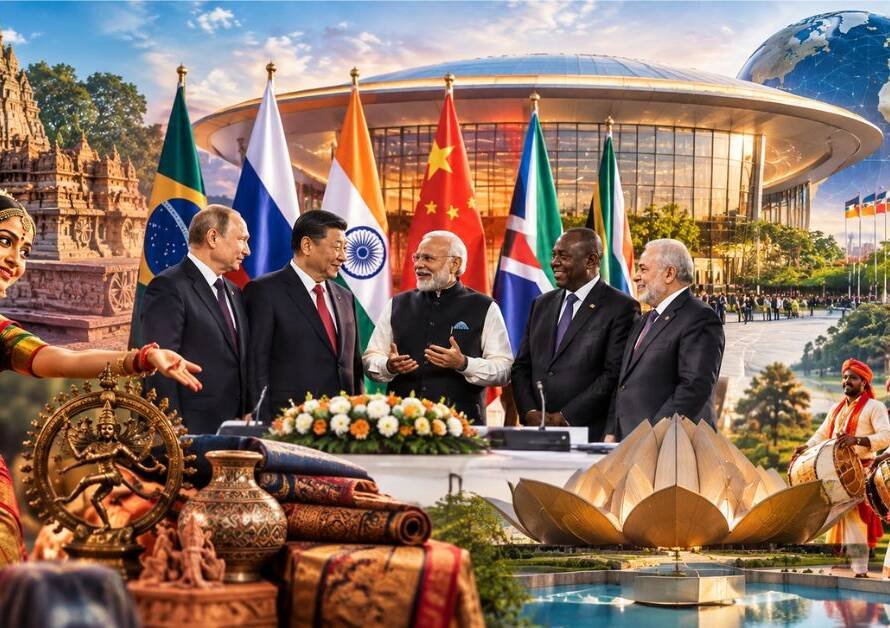
The India of today has fundamentally transformed. It is no longer the fragile, pleading, and dependent nation of 1991, but one of the world’s premier economic forces and a sovereign nuclear power that dictates its own terms.
- Survival of the Fittest: In global geopolitics and internal statecraft, it is an absolute law that only those civilizations that remain economically dominant, self-reliant, and capable of decisive retaliation survive and lead. Weakness serves only as an invitation to erasure.
- Tit-for-Tat Alignment: Every ideological or material assault directed against the nation’s identity, cultural heritage, and economic progress will now be met with an unyielding, symmetrical “Tit-for-Tat” response. The days of administrative hesitation and passivity are over.
- The Emergence of Strong Leadership: Under the stewardship of the current “double-engine” governance architecture, India has confidently crossed the threshold into a golden era of manufacturing autonomy, absolute border security, and cultural renaissance.
V. Dismantling the Anti-National Ecosystem
It is a strategic imperative to identify and politically neutralize the interconnected left-liberal and legacy networks within the country that seek to drag India back into an era of economic vulnerability, intellectual dependency, and social fragmentation.
- The Failure of Selective Grief: This specific ecosystem operates globally to tarnish India’s sovereign image while working internally to fracture society along regional and linguistic lines. The targeted rhetoric regarding energy tariffs is simply another link in this misinformation chain.
- An Enlightened Electorate: The public is fully aware that political factions responsible for historic economic mismanagement have no moral authority to lecture the state on inflation. The citizens refuse to be misled by such performative concern.
- Cultural and Economic Sovereignty: India is moving rapidly toward its destination as a global superpower. The awakened nation stands fully prepared to use democratic mechanisms to render irrelevant any element that attempts to sabotage this developmental trajectory.
🏛️ The March of a Self-Reliant Nation
- The public pronouncements of figures like Supriya Shrinate are nothing more than political theater from organizations whose historical record consists of liquidating national wealth and compromising sovereign assets.
- Factions that once pledged the nation’s gold and financial independence possess zero moral right to question the strategic, reformative decisions of a strong and self-reliant state.
The wave of cultural resurgence and uncompromising nationalism will not be halted; Bharat is reclaiming its rightful global stature, and the disruptors of history cannot arrest this momentum.
Read our previous blogs 👉 Click here
Join us on Arattai 👉 Click here
👉Join Our Channels👈