Summary
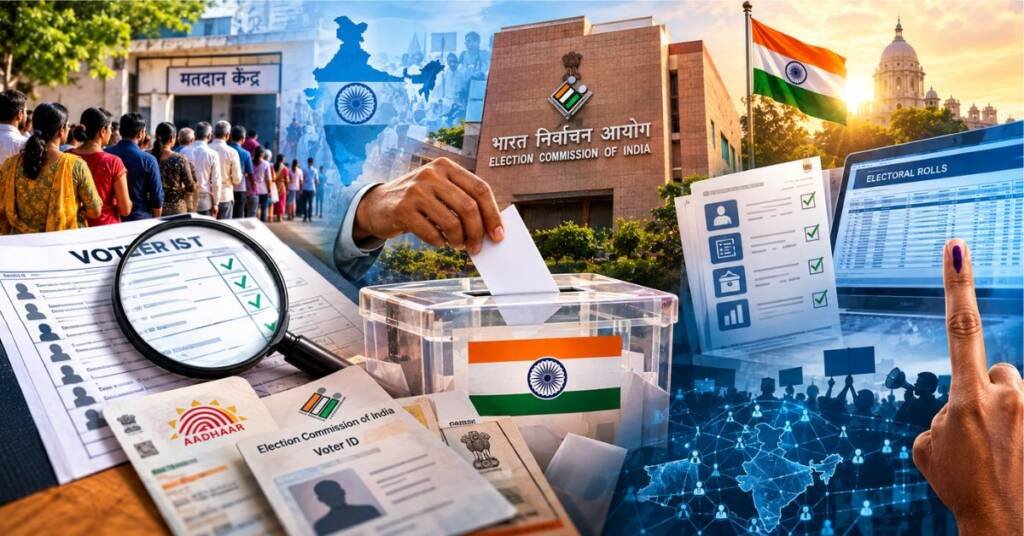
- This comprehensive narrative directly addresses and dismantles the persistent political rhetoric surrounding the Election Commission of India (ECI) and the Special Intensive Revision (SIR) of electoral rolls. By examining documented facts, court rulings, official timelines, and actual electoral outcomes, it debunks allegations of “Vote Chori” and systemic institutional bias.
- The text further analyzes the broader political landscape, arguing that opposition political blocs, unable to secure victory through traditional democratic mandates, have increasingly relied on attacking constitutional bodies and mobilizing street disruptions. It concludes with a call for political accountability and a focus on constructive nation-building.
- In the political discourse surrounding the Special Intensive Revision (SIR) of electoral rolls, slogans like “Vote Chori,” “SIR Scam,” and “ECI Bias” have been repeatedly deployed across public platforms.
- However, when measured against official records, timeline chronologies, Supreme Court rulings, and ground-level electoral results, these accusations collapse. Below are ten key facts that cut through the rhetoric and restore clarity to the record.
Debunking the ‘Vote Chori’ Noise
1. Chronological Impossibility: The 13 Crore Myth
- The Claim: Opposition narratives allege that 13 crore voters were systematically deleted from electoral rolls via SIR to influence the outcome of the 2024 General Elections.
- The Fact: The 2024 General Elections concluded in June 2024, whereas the nationwide SIR process was initiated a full year later, in June 2025. An administrative exercise commenced in 2025 cannot retroactively alter the voter lists utilized in an election that concluded in 2024.
- Administrative Reality: The names left out during draft revisions consisted primarily of deceased, duplicate, shifted, or long-absent voters identified during door-to-door verification. Under standard ECI protocol, draft rolls provide a clear window for claims and objections, enabling every eligible citizen to seek re-inclusion.
2. Decades of Precedent: SIR is an Established Constitutional Practice
- The Claim: Critics present the SIR as a novel, partisan mechanism invented specifically to alter electoral demographics.
- The Fact: Intensive door-to-door revisions are routine constitutional mechanisms authorized under Article 324 of the Constitution and the Representation of the People Act, 1950.
- Historical Precedent: Similar intensive revision drives were carried out across India in 1965–66, 1983–84, 1993, 1995, and 2002–03. Framing a periodic administrative exercise as a sudden political invention ignores over six decades of electoral history.
3. Judicial Validation by the Supreme Court
- The Claim: Opponents assert that the judiciary has rejected or condemned the SIR as an unconstitutional exercise.
- The Fact: On May 27, 2026, the Supreme Court of India formally upheld the constitutional validity of the SIR exercise, affirming the Election Commission’s statutory power to revise and purify electoral rolls.
- Institutional Safeguards: The apex court explicitly held that the revision advances the constitutional mandate of free and fair elections while establishing procedural safeguards to ensure no genuine voter is disenfranchised without due process.
4. A Two-Decade Administrative Gap in Roll Purification
- The Claim: The timing of the nationwide SIR was politically calibrated following election results.
- The Fact: Prior to 2025, a nationwide intensive revision had not occurred for more than twenty years (since 2002–04).
- Accumulated Bloat: During this multi-decade gap—further extended by COVID-19 disruptions and the postponement of the 2021 Census—electoral rolls accumulated millions of unverified entries, deceased voters, and duplicate registrations resulting from mass domestic migration. Political parties across the spectrum had repeatedly petitioned the ECI to clean up these bloated rolls.
5. Electoral Outcomes Contradict Claims of Targeted Manipulation
- The Claim: The SIR was designed as a “master plan” to defeat regional parties and opposition leaders.
- The Fact: Ground-level election results under revised and strictly monitored rolls reveal diverse outcomes across states:
- Tamil Nadu: The ruling national party won a single seat, while regional dynamics saw significant shifts in key constituencies.
- Kerala: The incumbent leadership retained key seats even as state-level power shifted to opposing alliances.
- West Bengal: The SIR was conducted under direct judicial monitoring with no court finding linking roll revisions to partisan outcomes.
- Broader Track Record: The ruling party at the Center has lost 27 State Assembly elections since 2015—including in states where it held power—demonstrating that voter choices, not administrative rolls, dictate electoral victories.
6. Timeline Misalignment on ECI Leadership
- The Claim: Opponents attribute ruling party victories in Haryana (October 2024) and Maharashtra (November 2024) to the appointment of Chief Election Commissioner Gyanesh Kumar.
- The Fact: Gyanesh Kumar assumed office as Chief Election Commissioner in February 2025. He was not serving as CEC when the Haryana and Maharashtra elections were conducted in late 2024.
7. Cross-Party Criticisms of ECI Procedures
- The Claim: The ruling national party unconditionally defends and colludes with the Election Commission.
- The Fact: The ruling party has repeatedly raised formal objections and filed petitions with the ECI regarding roll revisions in opposition-ruled states, such as Karnataka, alleging procedural irregularities. Criticisms of administrative roll management exist across all major political parties.
8. Constitutional Safeguards in CEC Selection and Removal
- The Claim: The executive branch can arbitrarily appoint or dismiss election commissioners at will.
- The Fact: Under statutory frameworks, the selection committee for Election Commissioners consists of the Prime Minister, a Union Cabinet Minister, and the Leader of the Opposition (who actively participated in the selection process).
- Removal Protection: A Chief Election Commissioner cannot be summarily removed by the government; removal requires a formal parliamentary impeachment process equivalent to that of a Supreme Court Judge, guaranteeing institutional autonomy.
9. Unanimity in Institutional Decision-Making
- The Claim: The SIR was pushed through without internal consensus within the Election Commission.
- The Fact: While internal discussions and operational queries were recorded during administrative deliberations, all three members of the Election Commission signed the final operational orders. The ECI officially confirmed that final decisions regarding the nationwide revision were made unanimously.
10. Absence of Evidentiary Submissions
- The Claim: Allegations of “Vote Chori” are backed by widespread documented proof.
- The Fact: When formal public allegations were made, the Election Commission formally requested written submissions, specific constituency data, and documentary evidence to initiate detailed probes. No formal evidentiary data was submitted.
- Judicial Oversight: The Supreme Court maintained active oversight throughout the revision, appointing judicial officers to handle voter appeals in states like West Bengal and utilizing Article 142 where necessary to protect genuine voters.
Part 2: Political Strategy, Opposition Dynamics, and the Mandate for National Progress
An analysis of these administrative realities highlights a broader shift in political strategy and public discourse:
- Electoral Realities: Political analysts observe that despite forming broad alliances, opposition coalitions have faced persistent challenges in defeating the current leadership through traditional democratic contests. The ruling administration has repeatedly secured mandates in national and state elections based on governance delivery, infrastructure expansion, and national security policies.
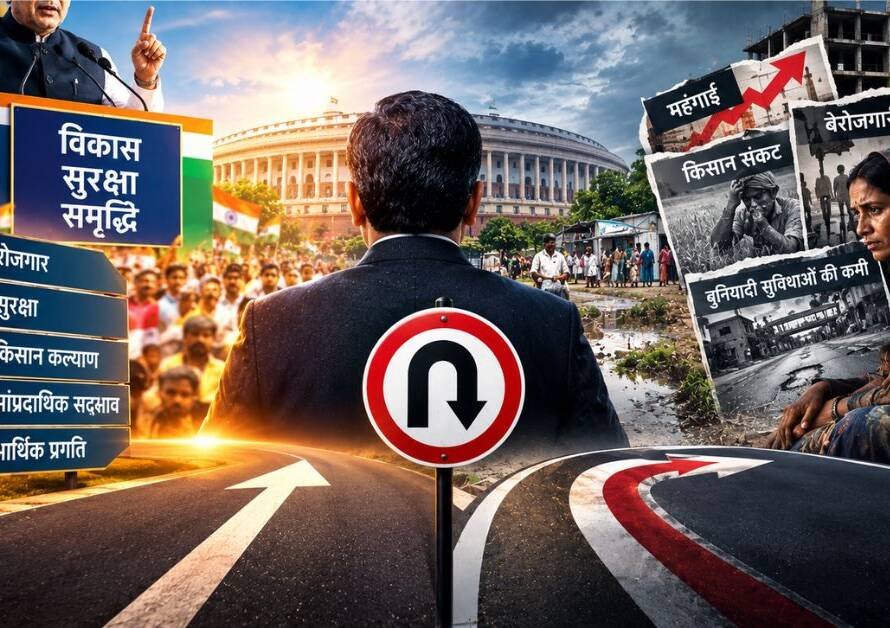
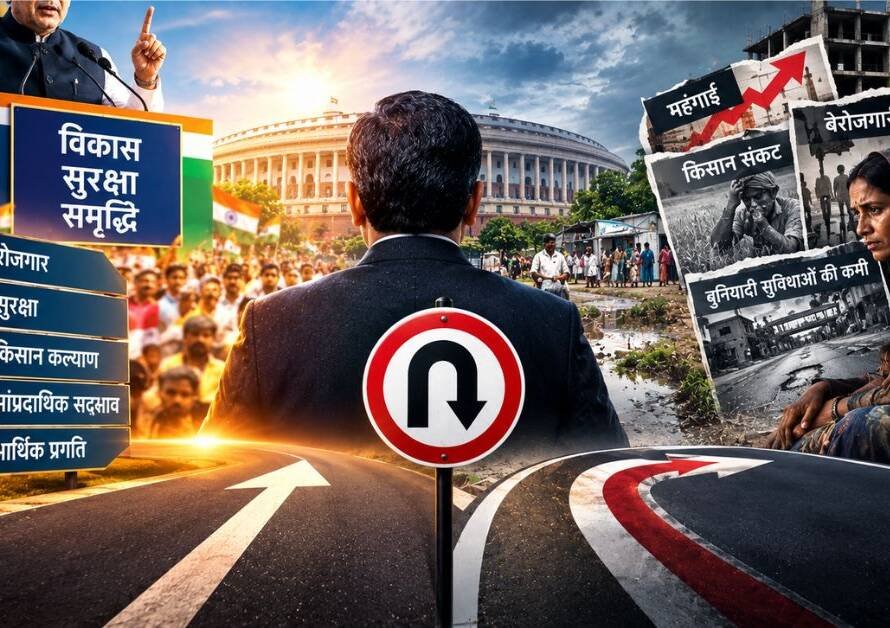
- Attacks on Constitutional Institutions: Rather than addressing organizational weaknesses or presenting an alternative developmental vision, opposition campaigns have increasingly focused on questioning constitutional bodies—including the Election Commission, the judiciary, and investigative agencies—in an attempt to cast doubt on democratic outcomes.
- Street Agitations and Youth Incitement: Unable to secure electoral majorities, opposition strategy has frequently pivoted toward street-level agitations, mobilizing student groups around unresolved socio-economic issues—many of which accumulated over decades of prior governance—in an effort to create public unrest and disrupt governance.
- The Electorate’s Choice: Critics contend that by opposing an administration focused on economic development, digital transformation, and national sovereignty, opposition blocs risk further alienating the electorate. The Indian voter has consistently chosen political stability, economic growth, and national progress—aimed at elevating India to a global economic leader—over rhetoric and institutional skepticism.
🇮🇳Jai Bharat, Vandematram 🇮🇳
Read our previous blogs 👉 Click here
Join us on Arattai 👉 Click here
👉Join Our Channels👈
Reads & Views: 55