Summary
- This analysis provides an in-depth study of political opportunism, narrative building, and ideological hypocrisy in Indian politics. Through specific examples, it illustrates how high-profile allegations are fabricated for political gain and swiftly abandoned when circumstances change.
- From selective statements about corporate houses to questioning the credibility of constitutional institutions, disrespecting national security establishments, and dividing the media according to convenience, a factual breakdown is presented here.
- This narrative also underscores that today’s aware Indian voter is not swayed merely by slogans or slideshows, but makes informed decisions based on governance policies, transparent delivery, and national progress.
1. The PPT Slide U-Turn and the Economics of Anti-Corporate Rhetoric
Targeting corporate houses and prominent industrialists from political platforms has become a common strategy. However, when such allegations lack policy conviction and stem purely from political opportunism, their credibility erodes rapidly.
- The Journey from Indore to Delhi: During a public event in Indore, when the opposition leadership presented a slide show (PPT presentation) to allege a takeover of the country’s resources, a leading industrialist’s photograph was featured prominently. Yet, just a week later, during the exact same presentation in Delhi, that picture surprisingly vanished.
- Politics Behind the Curtain: Neither the industrialist’s status nor the nation’s infrastructural framework had changed in seven days. This turn of events makes it clear that speeches and allegations made from public platforms are often fabricated purely for immediate political convenience and sensationalism.
- Red Carpet in Opposition-Ruled States: The very same corporate group accused of receiving undue favors from the Central Government is welcomed with a red carpet and thousands of crores in investment proposals in opposition-ruled states like Telangana, Karnataka, Himachal Pradesh, and Kerala.
- Gap Between Rhetoric and Action: Engaging in anti-corporate rhetoric during election rallies while relying on investments from those very same industrialists upon assuming power proves that the opposition is not rooted in principles, but in sheer double standards.
2. Selective Trust in Constitutional Institutions and Double Standards
In a democratic setup, institutions such as the Election Commission, the judiciary, and investigative agencies form the backbone of governance. However, questioning the neutrality of these institutions for political gain has become a concerning trend.
- Standard of Neutrality Dictated by Electoral Outcomes: When election results are favorable (such as in Tamil Nadu, Kerala, Karnataka, or Himachal Pradesh), the outcomes are celebrated as a “victory for democracy” and the Election Commission is praised.
- Blaming EVMs and the Commission Upon Defeat: The moment election results prove unfavorable (such as in Maharashtra, Haryana, Delhi, or Gujarat), baseless questions are immediately raised regarding the impartiality of the Election Commission, voter lists, and Electronic Voting Machines (EVMs).
- Politicization of Investigative Agencies: If a court or investigative agency delivers a favorable ruling, it is declared a triumph of justice; if the verdict goes against them, tears are shed over the alleged political misuse of agencies.
- Double Standards on Student Movements: Justified demands of protesting students in non-BJP-ruled states are ignored, whereas similar demonstrations elsewhere are leveraged for political mileage under the guise of the “voice of democracy.”
3. Disregarding National Security, Foreign Policy, and Strategic Achievements
A nation’s sovereignty depends on its security policies and strategic decisions. Over the past decade, India’s internal and external security apparatus has seen unprecedented strengthening—a reality the opposition often avoids debating.
- Disrespecting Security Establishments: Questioning the intent of top officials and the National Security Advisor (NSA), who work tirelessly to secure the nation’s borders and internal stability, reflects a lack of seriousness toward national security.
- Cracking Down on Insurgency and Terrorism: Through decisive measures such as surgical and air strikes, India has demonstrated a paradigm shift in its defense doctrine, effectively reining in cross-border terrorism.
- Energy Security and Strategic Oil Reserves: Prior to 2013, India’s petroleum storage capacity was severely limited, exposing the country to immense economic risks during global crises. Today, India maintains strategic oil reserves capable of sustaining the nation for over 40 days during emergency contingencies.
- Border Infrastructure Development: Construction of all-weather roads, tunnels, and bridges along the borders with China and Pakistan has progressed at record speed, multiplying the strategic reach of the Indian Armed Forces.
4. Media Polarization and Inability to Accept Criticism
Journalism is considered the fourth pillar of democracy. However, in the current political landscape, the media is selectively labeled as ‘truthful’ or ‘fake’ based on convenience.
- Fabricated Tagging of ‘Godi Media’: Journalists or media houses that objectively analyze positive government policies or ask tough questions of the opposition are instantly branded as biased.
- Validating Convenient Journalism: Conversely, analysts or digital commentators who exclusively praise a specific political party or launch unyielding attacks on the government are promoted as symbols of ‘neutrality.’
- Selective Stance on Freedom of Expression: Strict actions taken against journalists and social media users in opposition-ruled states are met with complete silence, while similar actions elsewhere are decried as an “attack on press freedom.”
5. Transparent Governance vs. The Era of Middlemen: The Post-2014 Shift
Since 2014, technology-driven transparency in India’s administrative setup has delivered a direct strike against corruption and the culture of middlemen.
- Digital Transparency (JAM Trinity): The integration of Jan Dhan, Aadhaar, and Mobile (JAM) enabled Direct Benefit Transfer (DBT), ensuring scheme funds reach beneficiaries directly into their bank accounts.
- Removal of Fake Beneficiaries: Through biometric verification and digital tracking, millions of fake ration cards, fraudulent LPG connections, and bogus NGO licenses were cancelled, halting the siphon of public funds.
- Crackdown on Shell Companies: Operational padlocks were placed on hundreds of thousands of bogus shell companies involved in money laundering and tax evasion, restoring integrity to the economy.
- E-Tendering and RERA: Mandatory e-tendering eliminated kickbacks in government contracts, while RERA was enacted to protect homebuyers from real estate speculation.
6. Conclusion: An Aware Electorate and the Resolve for a Developed India
Indian democracy stands at an intersection where the public clearly distinguishes between superficial rhetoric and ground reality.
- The End of Old-School Politics: Today’s India is no longer the India of the 1970s or 80s, where institutions could be driven by the agenda of a single family or party. Rule of law and accountability are now paramount.
- Public Wisdom: Voters are not swayed merely by speeches, dramatic stunts, or slideshows. They evaluate real outcomes in roads, electricity, internet connectivity, national security, and India’s global standing.
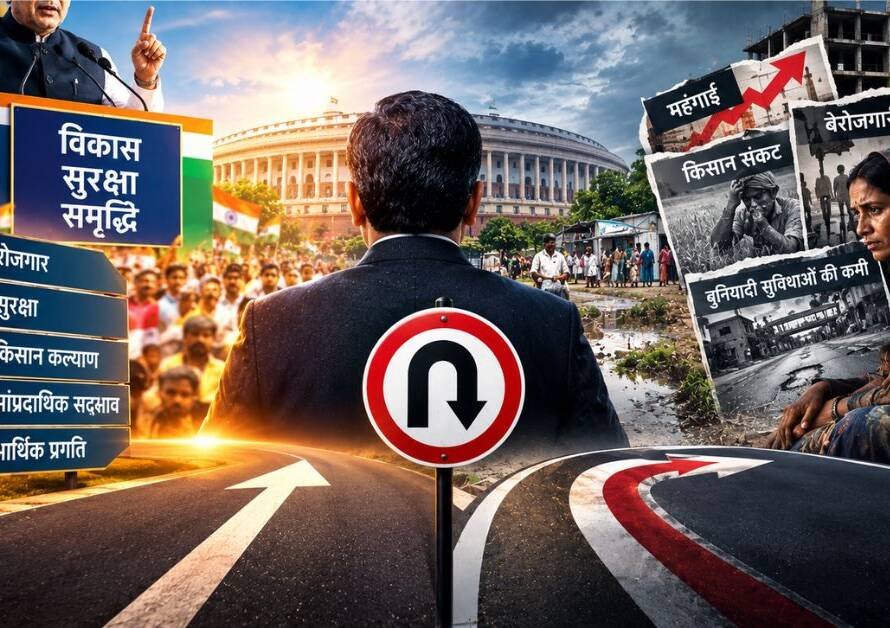
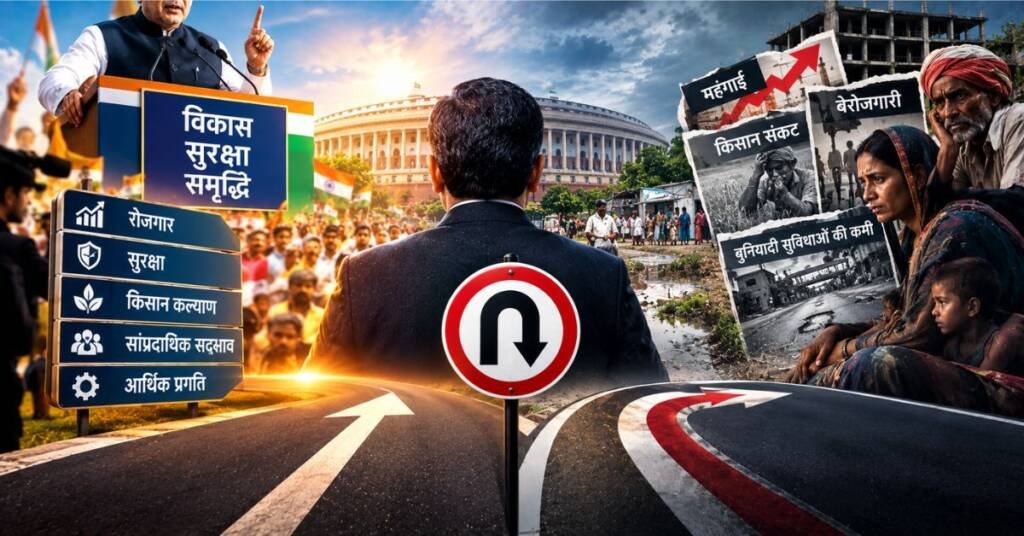
- Need for Political Maturity: A robust democracy requires a strong opposition, but that strength comes from offering credible policy alternatives and consistency—not from baseless allegations and frequent U-turns.
🇮🇳Jai Bharat, Vandematram 🇮🇳
Read our previous blogs 👉 Click here
Join us on Arattai 👉 Click here
👉Join Our Channels👈