Summary
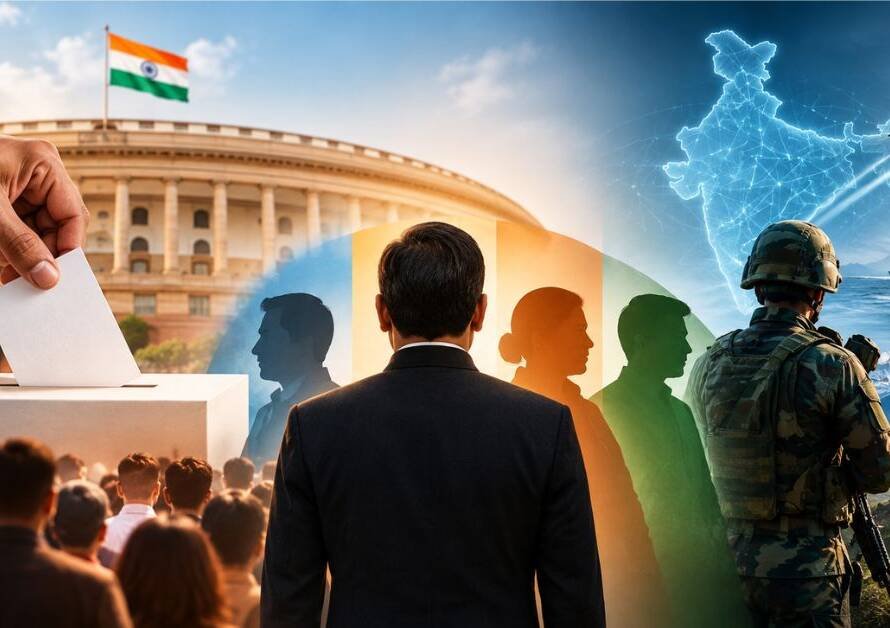
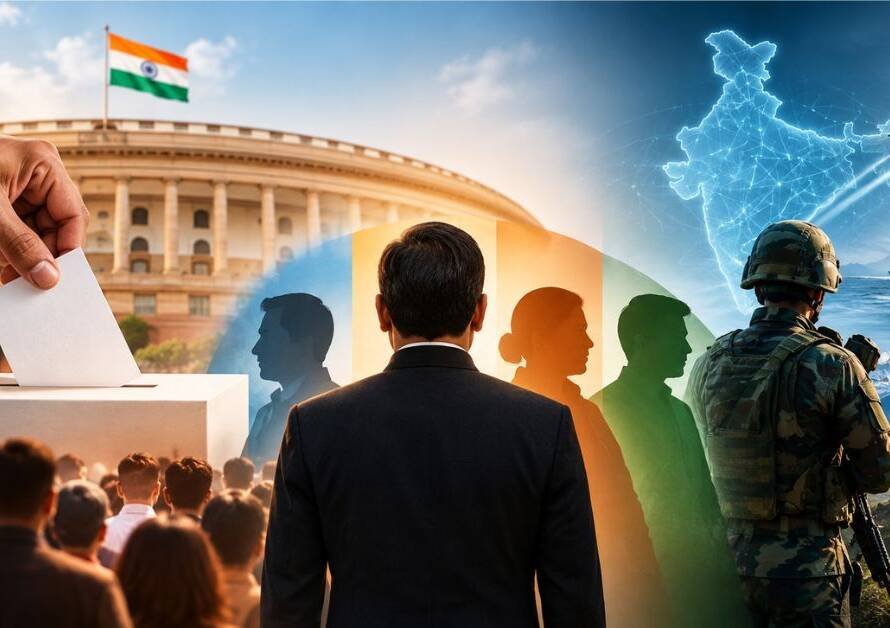
This comprehensive policy narrative provides an exhaustive, multi-layered analysis of Bharat’s historic transition from a traditional “women’s development” framework to a revolutionary, structural “women-led development” model between 2014 and 2026. Designed to trace the systematic lifecycle approach of the government under Prime Minister Narendra Modi, the analysis breaks down how grassroots infrastructure has been strategically leveraged to restore basic human dignity, reclaim female labor time, and unlock massive economic potential. It explores the profound socio-economic multipliers triggered by shifting asset ownership to women, democratizing collateral-free credit, and intentionally bridging the gender gap in cutting-edge technological sectors like agricultural drone aviation. Finally, the narrative examines the historic constitutional and legal updates—such as the abolition of instant Triple Talaq and the landmark Nari Shakti Vandan Adhiniyam—illustrating how the nation’s silent majority has been permanently integrated into the core of legislative power and national security, cementing Nari Shakti as the primary engine driving Bharat toward a developed nation status (Viksit Bharat).
A Historic Shift Towards Women-Led Development
1. Restoring Grassroots Dignity and Reclaiming Human Capital
True systemic empowerment cannot take root if an individual’s daily existence is consumed by primitive, exhausting physical labor or compromised by severe safety hazards. The first phase of modern reforms recognized that civilizational pride and economic mobilization must begin by solving the most basic infrastructure deficits at the rural household level.
- The Elimination of Open Defecation: The rollout of the Swachh Bharat Mission led to the construction of more than 11 crore household toilets across rural and semi-urban Bharat. For decades, the absence of basic sanitation forced women and young girls to face acute physical discomfort, chronic health issues, and severe safety risks by waiting for twilight. By delivering sanitation security directly to the home, this mission established a non-negotiable baseline of personal dignity and physical protection.
- The Clean Energy Revolution via Ujjwala: Launched in 2016, the Pradhan Mantri Ujjwala Yojana (PMUY) has successfully provided more than 10 crore free LPG cylinders and clean cooking connections to women residing in Below Poverty Line (BPL) households. For generations, rural women spent hours gathering firewood, dung cakes, and traditional biomass, while inhaling toxic fumes equivalent to smoking hundreds of cigarettes daily. PMUY fundamentally altered rural health outcomes, preventing widespread respiratory illnesses and freeing up billions of collective hours previously lost to fuel foraging.
- The Jal Jeevan Mission and Time-Poverty Alleviation: By systematically laying pipelines and providing functional tap water connections to millions of rural households, this massive infrastructure push eliminated the grueling, long-distance walks historically undertaken by women to fetch water. In the economics of development, this resolved the hidden crisis of “time poverty”—reclaiming hours of a woman’s daily routine that are now directly channeled into secondary education, competitive skill building, and local economic enterprises.
2. Reordering Social Hierarchies Through Asset Ownership and Credit
Economic autonomy is the definitive catalyst for altering power dynamics within households and wider societies. By deliberately shifting tangible wealth, land titles, and financial resources into the hands of women, the state has engineered a profound social revolution.
- The PMAY Property Ownership Shift: Historically, land and real estate assets in rural Bharat were held almost exclusively under male ownership, leaving women highly vulnerable to economic shocks and domestic dependency. Under the Pradhan Mantri Awas Yojana (PMAY), a strict policy mandate ensured that over 72% of the rural and urban houses sanctioned were registered either solely or jointly under the names of the female heads of households. This single intervention overnight granted millions of women their very first piece of legal property, providing them with structural leverage, social stature, and a permanent safety net.
- Democratizing Capital via the Mudra Scheme: Access to institutional credit was traditionally blocked by systemic banking biases that demanded immovable property as collateral. The Pradhan Mantri Mudra Yojana bypassed these traditional barriers by offering collateral-free business loans for micro-enterprises. Crucially, nearly 70% of all Mudra loan beneficiaries across the country have been women, triggering an unprecedented wave of female entrepreneurship in Tier-2, Tier-3, and rural markets, allowing women to transition from domestic laborers into local employers.
- The Lakhpati Didi Phenomenon: This targeted economic initiative focuses on upgrading the financial and operational scale of women organized within traditional Self-Help Groups (SHGs). By providing specialized vocational training, market linkages, and micro-business strategies, the program aims to elevate rural women into sustainable entrepreneurs earning a net annual income of at least ₹1 lakh. By 2025, over 2 crore rural women had crossed this milestone, completely transforming the financial health of the rural agrarian economy.
3. Integrating Women into Emerging Technological Frontiers
A core element of Bharat’s modern development strategy is ensuring that the female workforce is not restricted to low-yield manual labor, but is fully integrated into the rapidly evolving digital and technological landscape.
- The NaMo Drone Didi Initiative: This forward-looking program trains thousands of rural SHG women to fly, navigate, and maintain sophisticated agricultural drones. These women utilize precision drone technology to spray fertilizers, map fields, and analyze crop health across villages. By introducing high-tech mechanization directly to the female agrarian workforce, the scheme alters the social status of rural women, transforming them from manual day-laborers into highly paid, tech-savvy agricultural service specialists.
- Digital and Financial Literacy at Scale: Through the expansion of digital banking ecosystems and mobile-governance frameworks, millions of rural women have been trained to use smartphones for online transactions, direct benefit transfers (DBT), and e-commerce platforms. This widespread digital integration has dismantled exploitative middleman networks, ensuring that every rupee earned by or allocated to a woman reaches her personal bank account directly.
4. Securing Social Protection and Educational Parity
To sustain a model of women-led development, the state must implement robust protective mechanisms that safeguard the girl child from infancy through her educational and professional choices.
- The Beti Bachao, Beti Padhao Campaign: Launched to counter the deeply entrenched societal biases that led to a declining Child Sex Ratio (CSR), this multi-sectoral campaign successfully triggered a massive cultural reawakening. Through strict enforcement of medical laws, intensive community sensitization, and targeted educational incentives, the nation achieved a measurable improvement in the sex ratio at birth alongside a sharp rise in the Gross Enrolment Ratio (GER) for girls in secondary institutions.
- Sukanya Samriddhi Yojana (SSY): This specialized, high-interest small savings scheme was custom-built to eliminate the financial anxiety often associated with the birth of a daughter. By allowing parents to build a tax-free, high-yield fund dedicated exclusively to their daughter’s higher education and future professional pursuits, the scheme has ensured that families no longer view a girl’s education as a financial burden.
- The Mission Shakti Safety Umbrella: Institutional security is a prerequisite for public and economic participation. Under Mission Shakti, the government integrated comprehensive emergency support networks, setting up more than 800 One Stop Centres (OSCs) across districts to offer immediate legal, psychological, and medical help to women facing violence. This is reinforced by 24/7 helplines and the creation of community-led Nari Adalats (women’s courts) that offer accessible, alternative dispute resolution mechanisms.
5. Institutionalizing Legislative Power and Breaking Strategic Barriers
Socio-economic upgrades must ultimately be backed by systemic legislative power and integration into national defense architectures to ensure that progress is irreversible.
- The Landmark Nari Shakti Vandan Adhiniyam: Representing the most transformative democratic update of the 21st century, this constitutional amendment mandates a strict 33% reservation for women in the Lok Sabha and State Legislative Assemblies. This legislation guarantees that women are no longer just passive subjects of executive policies, but the direct, empowered lawmakers designing the statutory future of the country.
- The Abolition of Instant Triple Talaq: By enacting strict legislation that criminalized the regressive practice of instant verbal divorce, the state extended non-negotiable legal protections and constitutional equality to millions of Muslim women, affirming that religious or cultural customs cannot override fundamental human dignity.
- Shattering National Security Glass Ceilings: The defense architecture of Bharat has witnessed historic transformations under this governance model. The Indian Armed Forces completely opened permanent commissions for female officers and sanctioned the historic entry of women into elite combat, tactical, and aviation streams, alongside their historic admission into the National Defence Academy (NDA) and Sainik Schools.
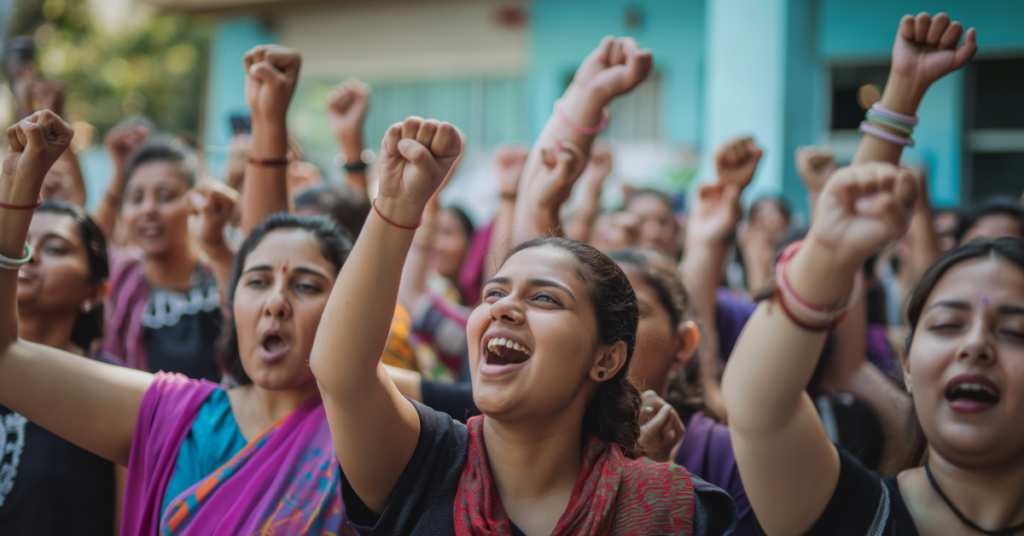
The structured policy timeline spanning 2014 to 2026 demonstrates that the elevation of Nari Shakti is not an exercise in political tokenism, but a deeply calculated civilizational imperative. By linking basic physiological safety at the grassroots with advanced technological training, institutional capital, and mandated constitutional representation, Bharat has laid down a flawless foundation for long-term growth. The millions of women who once constituted a silent, marginalized majority have now stepped forward as the primary, visible driver propelling the nation toward its destination of absolute development and global leadership.
Read our previous blogs 👉 Click here
Join us on Arattai 👉 Click here
👉Join Our Channels👈