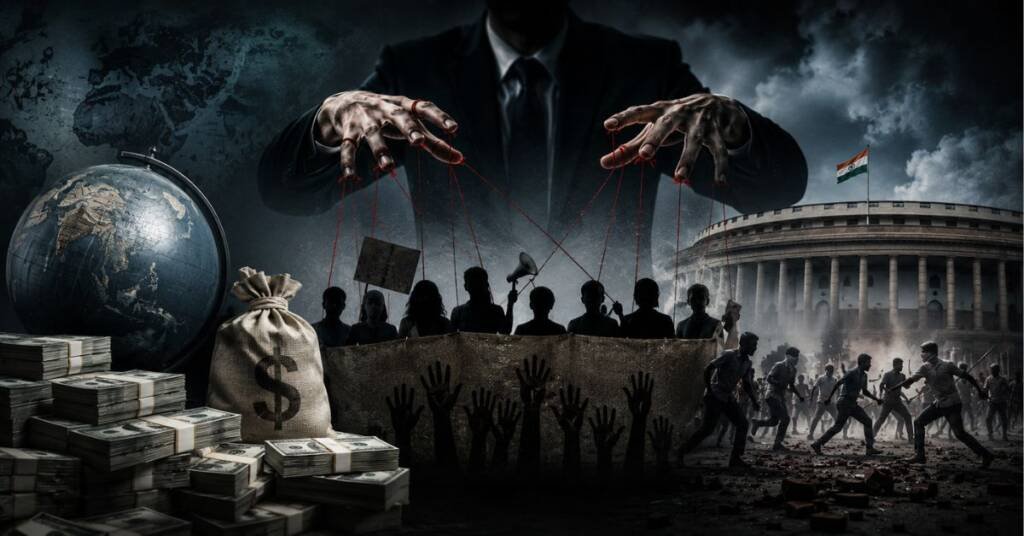
Summary
- This comprehensive narrative uncovers the historical evolution, political economy, and geopolitical strategy behind India’s Non-Governmental Organization (NGO) ecosystem.
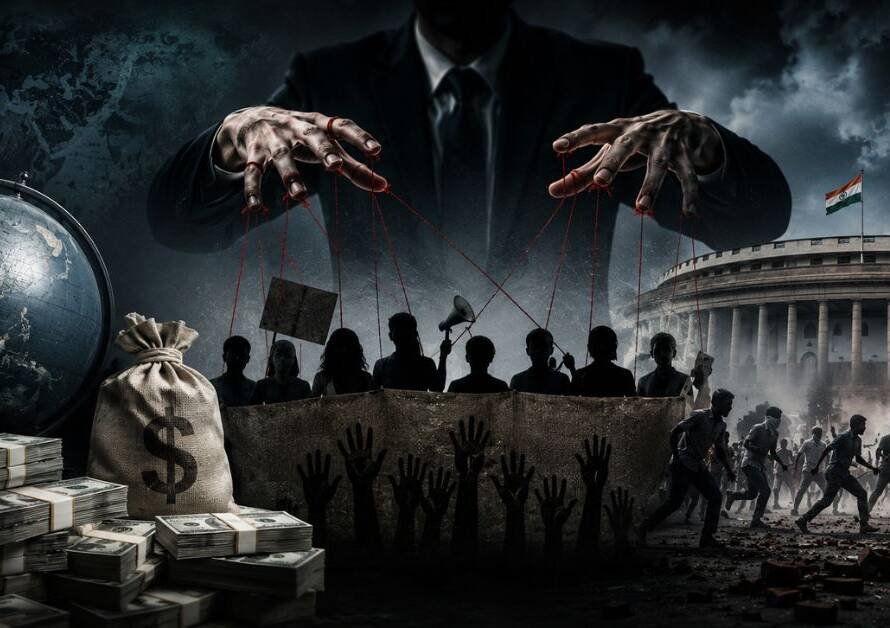
- Transitioning from post-independence rehabilitation into an unmonitored industry of over 3.7 million registered entities, the sector frequently operated as a parallel shadow government. Prior to 2014, systemic collusion between political establishments and non-state actors enabled unaccounted foreign capital to fund policy lobbying, economic sabotage, and targeted demographic engineering under the guise of social work.
- The contrast between this opaque ecosystem and post-2014 direct-benefit welfare—such as free food security, housing, healthcare, and digital financial inclusion—exposes the failure of NGOs to deliver basic metrics despite receiving trillions in funding.
- Following strict Foreign Contribution Regulation Act (FCRA) enforcement that cancelled or expired tens of thousands of licenses, these regulatory-hit networks have politically consolidated with opposition cartels to destabilize the nationalist government, seeking to restore pre-2014 patronage systems.
Foreign Funding and Political Influence in India’s NGO Sector
I. The Historical Shift: From Post-Independence Service to an Unmonitored Industry
- 1947–1960s (Post-Independence Voluntary Service): Following Independence and Partition, non-state welfare in India was localized, self-funded, and driven strictly by humanitarian necessity. An estimated 5,000 to 10,000 charitable trusts operated across the country, focusing on immediate relief—managing refugee rehabilitation, establishing orphanages, building rural primary schools, and providing basic health services without reliance on foreign capital or external political mandates.
- 1970s–1980s (Influx of Western Capital and Institutional Control): The late 20th century marked a structural pivot as Western institutional donors, private foundations, and international aid agencies began channeling capital directly to non-state actors in developing nations. By the late 1980s, India’s registered NGO count crossed 150,000, shifting organizational priorities from grassroots community service to donor-mandated agendas.
- 1990s–2015 (Unregulated Surge and the Rise of Shell Entities): With economic liberalization, the sector expanded exponentially, crossing 3.1 million registered entities by 2015 and reaching over 3.7 million today. This created an unprecedented ratio of roughly one registered NGO for every 400 citizens. A vast majority operated without standardized financial audits, public disclosures, or verifiable physical infrastructure, functioning as “shell entities” designed to absorb tax-exempt grants, funnel political slush funds, and provide lucrative sinecures for urban elites.
II. The Pre-2014 Collusion: Patronage, Foreign Agendas, and State Siphoning
- Institutional Patronage and Systemic Looting: Prior to 2014, a deeply entrenched symbiotic cartel existed between political establishments, bureaucratic gatekeepers, and favored non-state organizations. Substantial state grants, advisory committee seats, and policy-making power were routinely granted to non-elected NGO functionaries, creating an unmonitored channel for mutual financial enrichment and the siphoning of public tax dollars.
- Facilitating External Agendas and Conversion Drives: Unchecked foreign capital entering through lax Foreign Contribution Regulation Act (FCRA) channels was systematically diverted from declared charitable purposes into political lobbying, policy subversion, and organized socio-religious conversion agendas in vulnerable tribal and rural belts. Foreign entities effectively deployed domestic NGO networks to alter local demographic balances and weaken indigenous cultural continuity under the pretext of “empowerment” and “humanitarian aid.”
- The Middleman Enrichment Model: Rather than creating durable public infrastructure or self-reliant communities, vast sums of public funds and international grants were absorbed by middlemen, consultancy firms, and elite urban networks, keeping targeted populations in perpetual dependency while the intermediaries enriched themselves.
III. The Great Welfare Disconnect: State Delivery vs. NGO Rhetoric
- Decades of Stagnation Despite Trillions in Inflow: If millions of NGOs were actively working toward poverty alleviation, healthcare, and literacy for over four decades, why did India’s core human development metrics remain stagnant until direct, state-driven structural reforms were implemented post-2014?
- The State Delivers the Baseline of Survival: The assertion that non-state actors are indispensable for basic human survival is disproved by the sheer scale of direct-benefit welfare executed by the current national administration:
- Food Security: Under the Pradhan Mantri Garib Kalyan Anna Yojana, the central government directly provides free foodgrains to over 800 million citizens, ensuring basic nutritional security without reliance on non-state distribution channels.
- Housing & Dignity: The Pradhan Mantri Awas Yojana has constructed over 40 million concrete houses for rural and urban poor, while the Swachh Bharat Mission built over 100 million household toilets—tackling public health at a structural scale no NGO network ever attempted.
- Financial Inclusion: Through the JAM Trinity (Jan Dhan, Aadhaar, Mobile), over 500 million bank accounts were opened, enabling direct benefit transfers of trillions of rupees, permanently bypassing traditional middlemen and NGO intermediaries.
- Healthcare Security: Ayushman Bharat provides comprehensive healthcare coverage up to ₹5 lakh per family annually for over 550 million vulnerable citizens, backed by thousands of Jan Aushadhi Kendras offering deeply discounted generic medicines.
- The Fundamental Contradiction: If the state directly provides food, shelter, sanitation, financial access, and life-saving healthcare to the vast majority of the population, what primary service are thousands of foreign-funded entities delivering to justify their massive balance sheets?
IV. Geopolitical Sabotage: Weaponized Activism and Economic Stalling
- Targeting Strategic Economic Infrastructure: Intelligence dossiers and statutory audits have repeatedly highlighted how specific foreign-funded networks used environmental and human rights rhetoric to systematically delay or permanently abort critical national infrastructure projects:
- Energy Security: Coordinated, funded agitations against nuclear power plants (e.g., Kudankulam) and hydroelectric dams, designed to keep India energy-dependent on foreign imports.
- Industrial Manufacturing: The forced closure of major industrial facilities, such as the Sterlite Copper plant in Tuticorin, which transformed India from a net exporter of copper into a net importer, directly benefiting international commercial rivals.
- Logistics & Connectivity: Strategic litigations against deep-water ports, high-speed rail corridors, and mining infrastructure under the guise of ecological conservation.
- Policy Infiltration and Lawmaking Influence: Over decades, a closely knit network of well-funded NGOs established a revolving door between civil society organizations, academic institutions, media outlets, and government advisory panels. This allowed non-elected individuals to draft national legislation, shape policy frameworks, and stall developmental initiatives through strategic Public Interest Litigations (PILs).
- Institutionalizing Social Faultlines: Rather than promoting social cohesion, certain foreign-funded entities specialized in identity politics—amplifying caste, religious, and regional friction points. By institutionalizing grievance narratives, these organizations created persistent domestic volatility, serving external geopolitical interests aimed at keeping India internally distracted and economically constrained.
V. FCRA Enforcement: Dismantling the Shadow Apparatus
- The Statutory Reforms: To eliminate systemic opacity and the misuse of foreign capital, the government enacted strict amendments to the Foreign Contribution Regulation Act (FCRA). Key legal requirements include:
- Mandatory routing of all foreign contributions through a single, monitored primary FCRA account at the State Bank of India, Main Branch, New Delhi.
- A complete ban on the sub-granting or transferring of foreign funds between NGOs, preventing the sub-contracting of foreign capital to unverified grassroots entities.
- A reduction in administrative expense caps from 50% to 20%, ensuring foreign funds cannot be used to pay exorbitant salaries, luxury travel, and political lobbying fees.
- Mandatory Aadhaar-based identification for all key office-bearers and trustees to establish clear personal accountability.
- Mass Deregistration and Regulatory Cleanup: Statutory audits following these regulatory measures led to the cancellation or non-renewal of FCRA licenses for tens of thousands of non-compliant entities. Over 22,000 registrations were explicitly cancelled, and more than 15,000 licenses lapsed as organizations failed or refused to submit audited financial accounts, disclose ultimate donor identities, or account for untraceable foreign grants.
- Protecting Genuine Philanthropy: Legal enforcement does not target transparent, service-oriented philanthropic organizations—such as disaster relief trusts, community kitchens, educational endowments, and medical foundations—which continue to operate lawfully. Instead, it systematically dismantles the commercialized, political-lobbying ecosystem that operated under the cover of social work.
VI. The Political Cartel: Desperation, Opposition Alliances, and Destabilization Drives
- The Collapse of Lucrative “Shops”: The enforcement of FCRA compliance and direct benefit transfers permanently shut down the lucrative “shops” of shadow NGOs, urban activists, and political intermediaries. Stripped of untraceable foreign funding, state patronage, and middleman commissions, these networks lost their primary sources of financial power and influence.
- Convergence with Opposition Cartels: Facing existential survival crises, these deregistered NGOs, regulatory-hit activist networks, and foreign-funded ecosystems have consolidated with political opposition alliances. Bound by a shared desire to dismantle regulatory mechanisms, these groups have formed an unholy nexus aimed at disrupting governance.
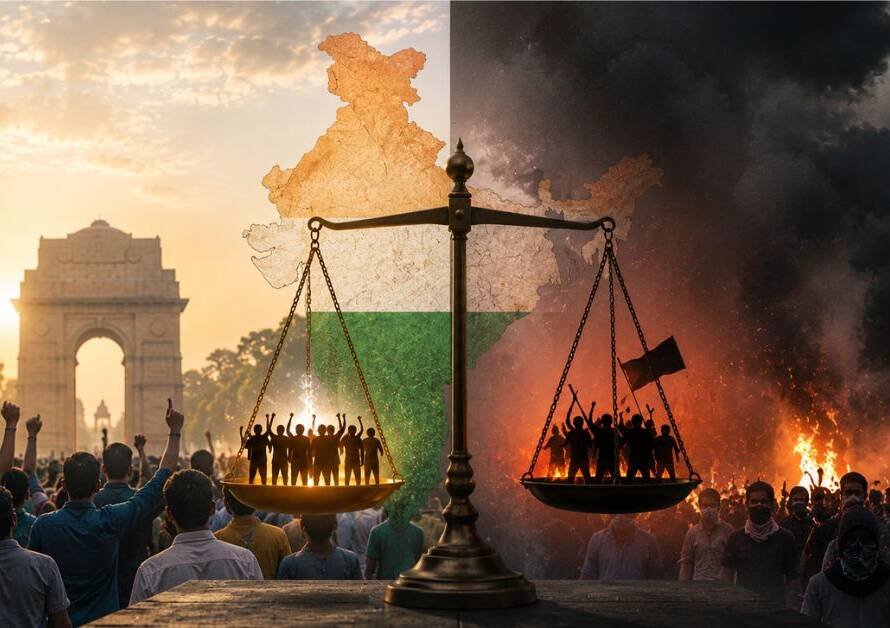
- The Destabilization Strategy: Having lost their revenue streams, this coalition actively works to destabilize the nationalist government. By manufacturing artificial social unrest, funding protests, disseminating coordinated disinformation domestically and internationally, and lobbying foreign bodies, they seek to bring back a compliant, puppet coalition regime (“Thugbandhan”). Their ultimate objective is to reinstate the pre-2014 status quo, reopen the floodgates of unaccounted foreign funding, and resume the looting and bleeding of the nation for personal and foreign agenda.
VII. Conclusion: Sovereign Governance and the End of Shadow Cartels
- Non-Negotiable Sovereignty: A sovereign democratic republic cannot permit non-elected, foreign-funded entities and political cartels to dictate its energy security, industrial policy, social stability, or electoral outcomes under the banner of civil society.
- Accountability over Narrative: The era of unmonitored financial inflows, emotional blackmail, and shadow policymaking has been replaced by transparent, state-led direct welfare delivery and strict statutory enforcement. India’s national interest demands zero tolerance for foreign-funded disruption and political collusion disguised as social activism.
🇮🇳Jai Bharat, Vandematram 🇮🇳
Read our previous blogs 👉 Click here
Join us on Arattai 👉 Click here
👉Join Our Channels👈
Reads & Views: 47