Summary
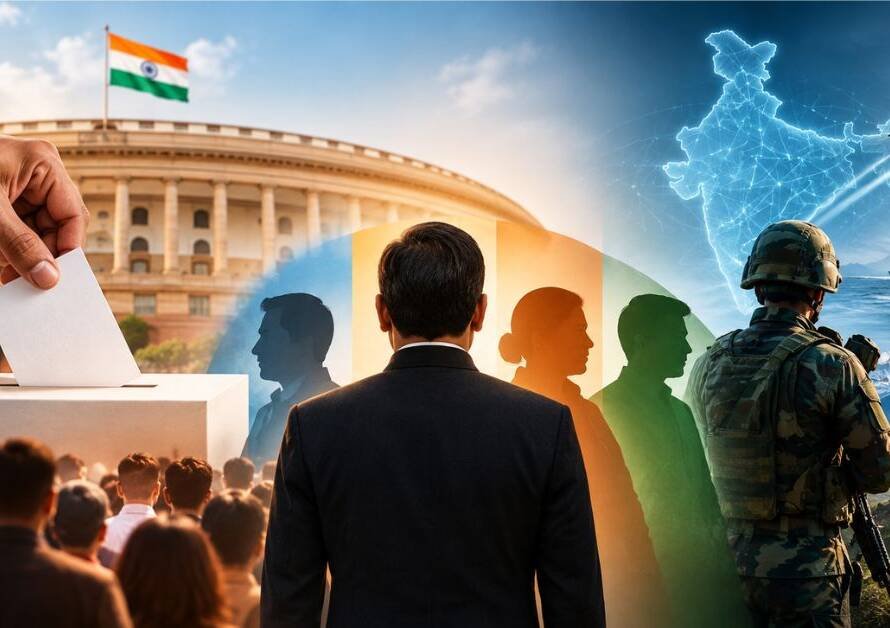
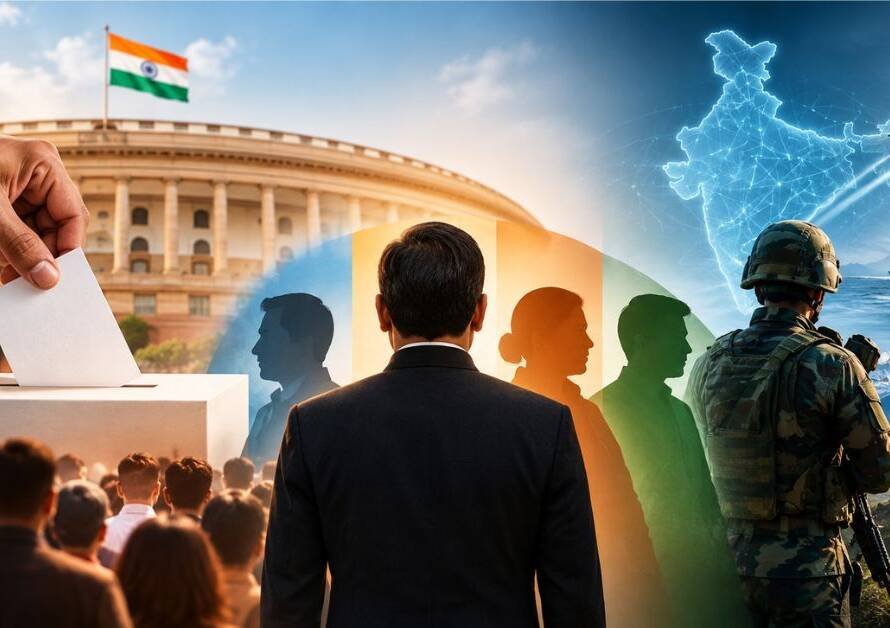
- This discourse is a comprehensive analysis of the selective and unbalanced policies adopted in independent India under the guise of secularism.
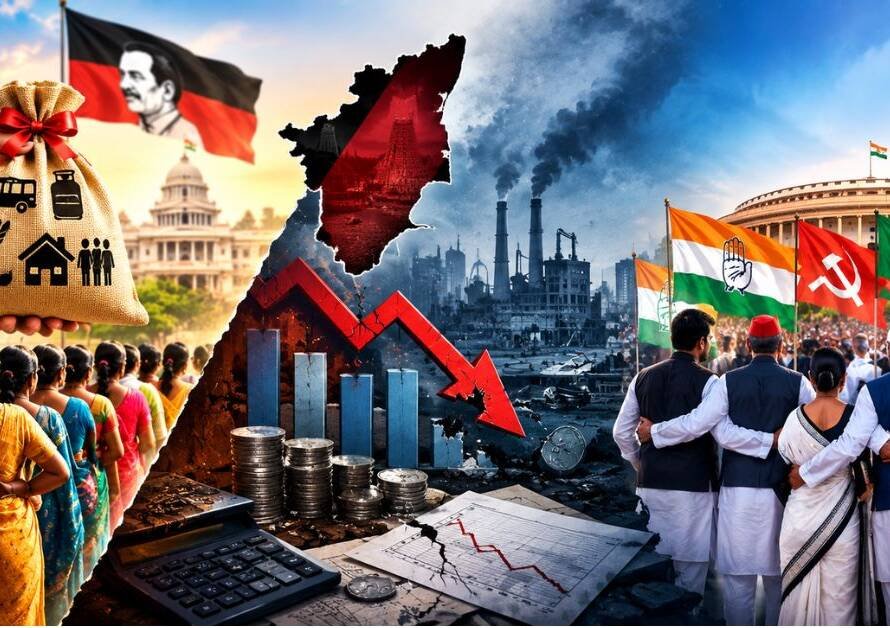
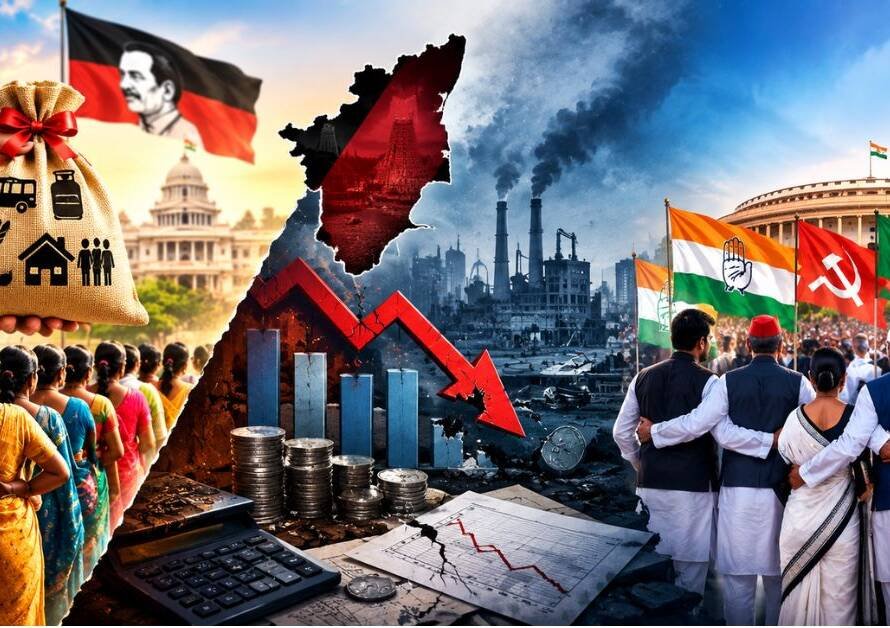
- In their quest for vote-banks, past governments promoted one-sided appeasement. Consequently, the majority Hindu community was divided along caste lines, their cultural pride was suppressed, and their religious places were placed under administrative control. On the other hand, systems like the Waqf Act created a parallel administrative structure.
- Highlighting historical inconsistencies, the demographic crisis arising from illegal infiltration in border states, and threats to internal security, this document calls upon every citizen to stand in favor of a Uniform Civil Code (UCC), Waqf reforms, and cultural nationalism.
Appeasement Politics: Definition and Historical Background
1. Introduction: Historical Contradictions and Distorted Secularism
The distorted model of secularism imposed on India after independence created a deep social divide instead of establishing equitable governance.
- The Contradiction of Partition: The Partition of 1947 took place under the ‘Two-Nation Theory’ based on religion. When the demand for a separate nation (Pakistan) for the Muslim community was accepted, why were policies offering special privileges to the same religious identity continued in the remaining India?
- The Facade of Secularism: The secularism crafted by the Congress and its ally parties merely became a tool to impose legal restrictions on the majority community while preserving the minority vote-bank.
2. Constitutional Inconsistencies: Parallel Systems and the Erosion of Rights
Contrary to the claims of constitutional equality, political priorities weakened the foundational legal system of the country.
- Supremacy of Religious Law: Parallel to the country’s sovereign Constitution, non-constitutional bodies like the All India Muslim Personal Law Board (AIMPLB) were given a free hand to prioritize Shariat in civil matters such as marriage, divorce, and inheritance.
- Neglect of Article 44: Article 44 of the Constitution explicitly directs the State to implement a ‘Uniform Civil Code’ (UCC). However, fearing the loss of vote-banks, past rulers kept it in cold storage for decades.
- Selective Reforms: While the ‘Hindu Code Bill’ was enacted to reform practices within Hindu society, no political willpower was shown to reform minority personal laws.
3. Selective Regulations and Institutional Bias
A secular state’s duty is to not discriminate on the basis of religion, yet a biased structure was built at the institutional level in India.
- The Politics of the Minority Commission: When the Constitution guarantees equal fundamental rights to all, why is there a need for a separate National Commission for Minorities (NCM)? This system keeps society permanently divided.
- Resource Allocation on Religious Lines: Under slogans like “first claim on resources,” the allocation of government schemes and scholarships was determined by religious identity rather than economic backwardness, leaving the majority poor neglected.
- Double Standards in Education Laws: The Right to Education (RTE) Act was strictly enforced only on Hindu-run institutions, while minority institutions were exempted from it, giving them a free hand.
4. Double Standards on Religious Places: Taxes and Government Control
Article 27 of the Constitution prohibits levying taxes for the promotion of any particular religion, but on the ground, clear discrimination was practiced against temples.
- Government Control over Temples: Rich Hindu temples across the country were brought under government control through ‘Hindu Religious and Charitable Endowments’ (HR&CE) laws. Non-believing officials were entrusted with their management.
- One-Sided Exploitation of Revenue: The donations offered by Hindu devotees are utilized through the state treasury for non-religious and secular activities.
- Complete Freedom for Other Places of Worship: Mosques, churches, and gurudwaras face no administrative or financial control from the government. This double standard is a direct violation of the religious rights of the majority community.
5. The Waqf Act (1995): A Parallel Fiefdom
The amended Waqf Act of 1995 represents the pinnacle of appeasement, vesting absolute powers in a religious body.
- Unrestricted Powers: The Waqf Board has the power to declare any private, government, or temple property as Waqf property. The original owner is forced to run around Waqf Tribunals just to save their own land.
- Absence of Judicial Review: Decisions of the Waqf Board cannot be challenged in ordinary civil courts. Placing a single religious board above the judiciary in a democratic country is a mockery of national sovereignty.
6. Appeasement Politics and the Vicious Cycle of Vote-Banks
To remain in power, national parties and regional coalitions sidelined national interests.
- The Shah Bano Case: In 1985, the then Rajiv Gandhi government used its parliamentary majority to overturn a progressive judgment of the Supreme Court. This became the biggest historical proof of surrendering to extremists and practicing appeasement.
- Divisive Policies: While the minority community was preserved as a consolidated vote-bank, the majority community was fragmented along the lines of caste censuses and regional identities so that they could never raise a collective voice.
7. Cultural Erosion and the Distortion of History
To erase a nation’s identity, its history is distorted, and this is exactly what was executed in India.
- Glorification of Invaders: Textbooks glorified brutal foreign invaders (such as Aurangzeb, Babur, etc.) who demolished temples and carried out massacres, while national heroes like Chhatrapati Shivaji Maharaj and Maharana Pratap were pushed to the margins.
- Cultural Inferiority Complex: In the name of secularism, Indian moral values and scriptures were barred from state education, while madrasas and missionary schools continued to receive government grants for religious propagation.
8. Threats to National Security and Sovereignty
The hunger for vote-banks put the country’s borders and internal security at stake.
- Demographic Invasion (Demographic Threat): In border states like West Bengal and Assam, illegal infiltrators (such as Rohingyas and Bangladeshis) coming from Myanmar and Bangladesh were given political patronage and provided with identity documents. This demographic shift has severely compromised internal security.
- Soft Stance on Terrorism: Due to appeasement, human rights of terrorists were prioritized, and false narratives like ‘Saffron Terror’ were manufactured to demoralize security agencies and shield religious extremism.
9. Raise Your Voice in National Interest!
India has now entered an era of cultural resurgence. This is the time to awaken national consciousness and reform the system.
- One Nation, One Law: A Uniform Civil Code (UCC) must be implemented across the country immediately to end religion-based privileges.
- Institutional Reforms: The Waqf Act should be repealed or heavily reformed, and Hindu temples must be freed from government clutches and handed back to the community.
- Demand for Unity: Rise above caste divisions and embrace a strong, undivided spirit of cultural nationalism.
“Think… Understand… and raise questions in the national interest to protect your national sovereignty, culture, and rights!”
🇮🇳 Jai Bharat, Vandematram 🇮🇳
Read our previous blogs 👉 Click here
Join us on Arattai 👉 Click here
👉Join Our Channels👈